
For many watch enthusiasts, the gentle glow of lume in the dark is one of the most satisfying features of a timepiece. Whether it’s the greenish hue of a diver’s watch or the soft blue shimmer on a pilot’s dial, lume (short for luminescence) makes watches practical and beautiful. But over time, that glow tends to fade — sometimes subtly, sometimes dramatically. Why does this happen? Let’s dive into the science, history, and care tips behind fading watch lume.
The Origins of Watch Lume
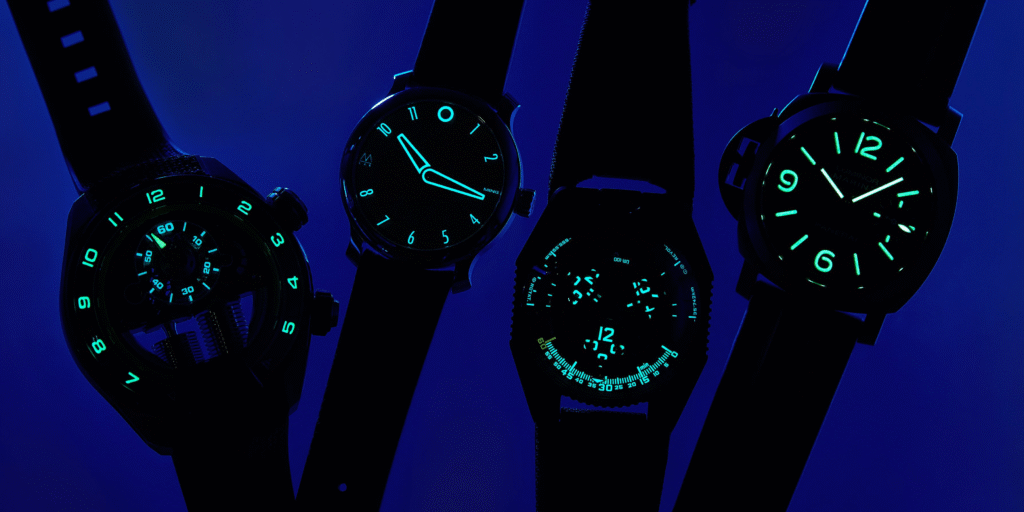
Lume has been part of watchmaking for over a century. Early luminescent watches used radium, a radioactive substance that glowed constantly without needing light exposure. While effective, radium was later discovered to be highly dangerous, leading to its ban in the mid-20th century.
In the 1960s, manufacturers switched to tritium, another radioactive element but far less harmful. Tritium glows by itself, but its light intensity weakens over time due to its 12.3-year half-life. Modern watches, however, rely primarily on photoluminescent materials like Super-LumiNova, which are completely safe and long-lasting — but need to be “charged” by light.
How Modern Lume Works
Modern lume doesn’t glow on its own — it stores energy from light sources and releases it slowly in the dark. The material, usually a mix of strontium aluminate and a binding agent, absorbs photons from sunlight or artificial light. When the surrounding environment darkens, those stored photons are released as visible light.
This process is called photoluminescence. However, because it relies on stored energy rather than a self-generating chemical reaction, the brightness fades gradually until it’s recharged again.
Why Lume Fades Over Time
There are two main reasons lume fades: short-term fading (after charging) and long-term fading (over years of use).
Short-term fading happens as the stored energy from light is released. Even the brightest Super-LumiNova will gradually dim after a few hours in the dark — that’s perfectly normal and part of how photoluminescence works.
Long-term fading, on the other hand, happens because of material degradation and aging of the binder that holds the luminous particles in place. Here’s what causes it:
- UV Exposure: Continuous exposure to sunlight can degrade the lume’s pigments and its binder.
- Moisture: Over time, humidity or tiny amounts of water entering the watch can alter the chemical stability of the lume.
- Temperature Fluctuations: Heat and cold cycles can cause microcracks in the dial or hands, weakening the lume’s adherence.
- Aging of the Binder: The clear resin that holds the lume particles may yellow or lose its transparency, reducing brightness.
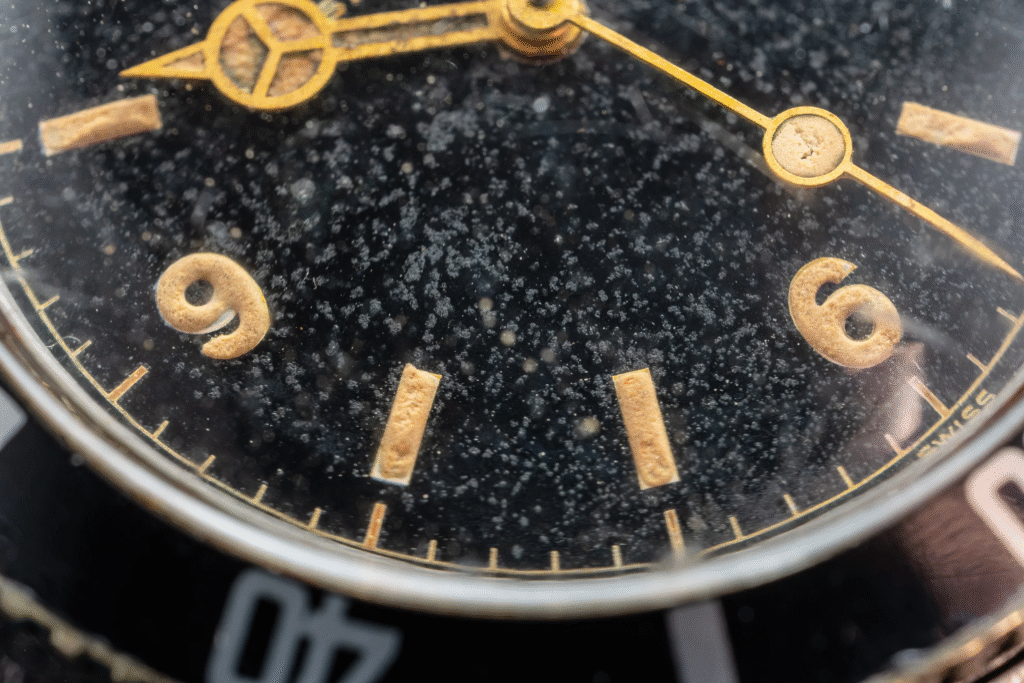
In vintage watches, these effects often result in “tropical” or patinated lume, where once-white lume turns cream, tan, or even orange — a feature that many collectors now find highly desirable.
Different Lume Materials and Their Lifespan
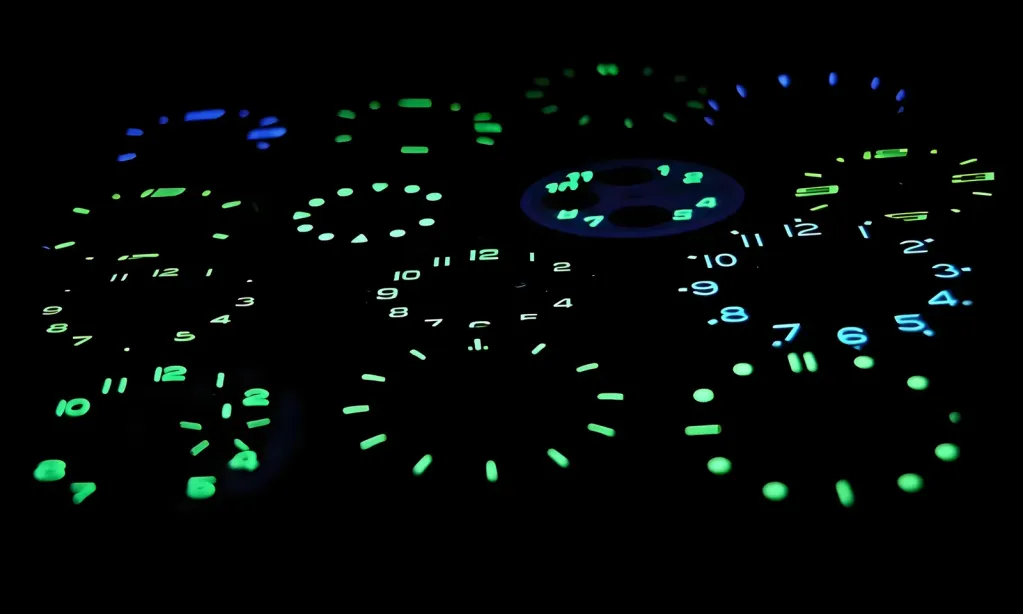
To understand why some lume lasts longer than others, it helps to know what they’re made of.
Here’s a quick comparison:
| Lume Type | Era | Glow Source | Lifespan | Notes |
|---|---|---|---|---|
| Radium | 1910s–1950s | Radioactive decay | Glows for decades (radioactive) | Dangerous, no longer used |
| Tritium | 1960s–1990s | Beta radiation | 10–20 years | Safe at low levels; fades permanently |
| Super-LumiNova | 1990s–present | Photoluminescence | Decades (if cared for) | Needs light charging; safe and non-radioactive |
| BGW9 / C3 Compounds | Modern | Photoluminescence | Decades | Brighter and longer-lasting versions of Super-LumiNova |
Can You Restore or Replace Faded Lume?
Yes — but it depends on your watch’s value and purpose.
For modern watches, a skilled watchmaker can re-lume the dial and hands with fresh luminous paint. Brands like Seiko, Omega, and Rolex use specific lume compounds to ensure consistent brightness.
However, for vintage watches, collectors often prefer leaving the faded lume untouched. Original lume, even if discolored, adds character and authenticity. Re-luming a vintage Rolex Submariner or Omega Seamaster could actually reduce its resale value significantly.
Tips to Preserve Your Watch’s Lume
If you want your watch lume to last longer, proper care can make a big difference:
- Avoid prolonged UV exposure: Store your watch away from direct sunlight when not in use.
- Keep it dry: Ensure the gaskets and seals are in good condition to prevent moisture damage.
- Clean gently: Avoid harsh chemicals that might damage the lume layer.
- Service regularly: A professional service every few years can help identify issues before they cause permanent damage.
The Beauty of Fading Lume
Interestingly, faded lume has become a sought-after aesthetic in the watch world. Collectors pay a premium for naturally aged dials that develop a warm patina — especially when the lume has aged evenly. What was once seen as wear and tear is now regarded as charm and character.
From a glowing diver in a dark ocean to a vintage field watch with cream-tinted lume, this gentle fade tells a story — one of time, use, and history.
Final Thoughts
Watch lume is more than a practical feature — it’s part of the magic that connects technology, design, and emotion in horology. Whether it’s the modern brilliance of Super-LumiNova or the soft patina of vintage tritium, lume captures the passage of time in a uniquely visual way.
While it may fade, its glow — both literal and symbolic — never truly disappears.





One Comment