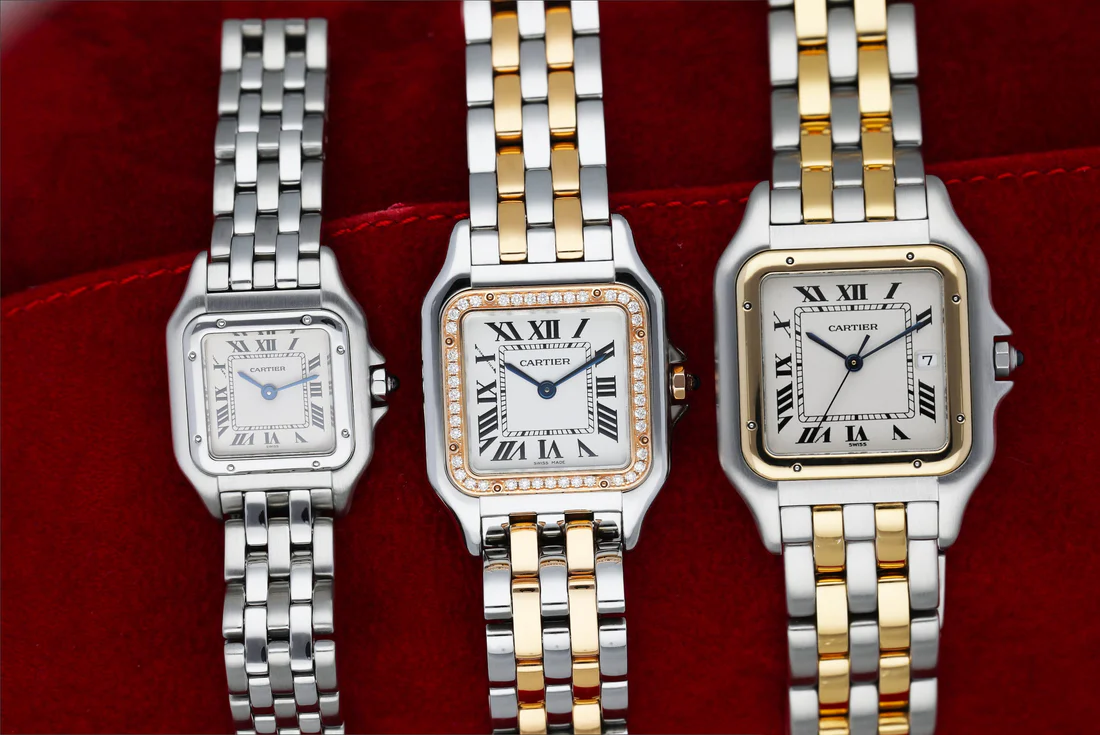
Few names in watchmaking carry the same weight, mystique, and cultural influence as Cartier. Long before it became a symbol of Parisian luxury, Cartier was already redefining what a wristwatch could look like. Unlike many Swiss maisons that built their legacy on mechanical innovations, Cartier became legendary through design—clean geometry, architectural lines, and unmistakable elegance.
Cartier watches blend jewelry heritage with horological craft. They are immediately recognisable, effortlessly wearable, and timeless in a way few brands can replicate. Below is the most complete guide to every major Cartier model, including iconic, discontinued, and modern collections — an essential reference for collectors, newcomers, and enthusiasts.
Cartier Tank: The Most Iconic Shape in Watchmaking
The Cartier Tank is arguably the most influential rectangular watch ever created. Introduced in 1917 and inspired by the aerial view of WWI Renault tanks, its clean geometry and parallel brancards defined the blueprint for dress watches.
Over the decades, Cartier has expanded the Tank family into multiple sub-collections:
Tank Louis Cartier
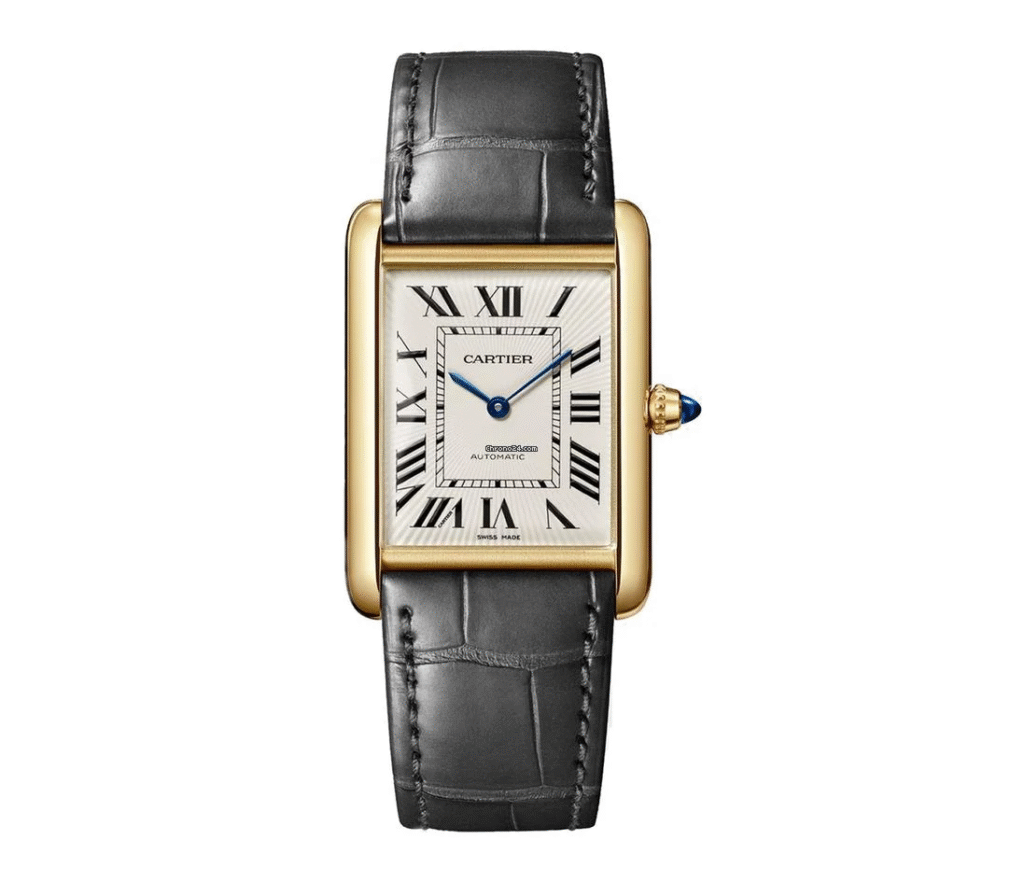
The purest expression of Cartier elegance, known for its rounded brancards, slim profile, and warm gold tones. This is the classic Tank worn by style icons for over a century.
Tank Must
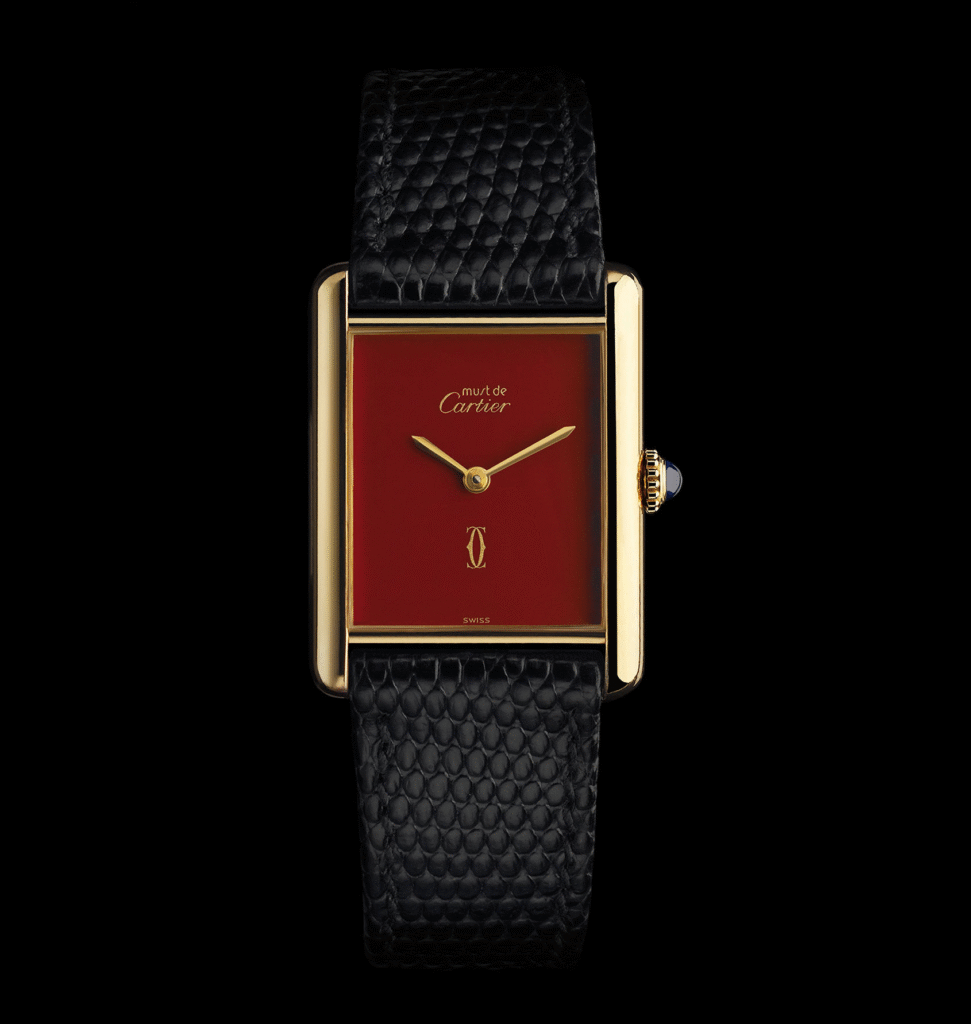
A more approachable, modern reinterpretation revived in 2021. It offers quartz and mechanical options, coloured lacquer dials, and a design faithful to the 1970s Must de Cartier era.
Tank Solo
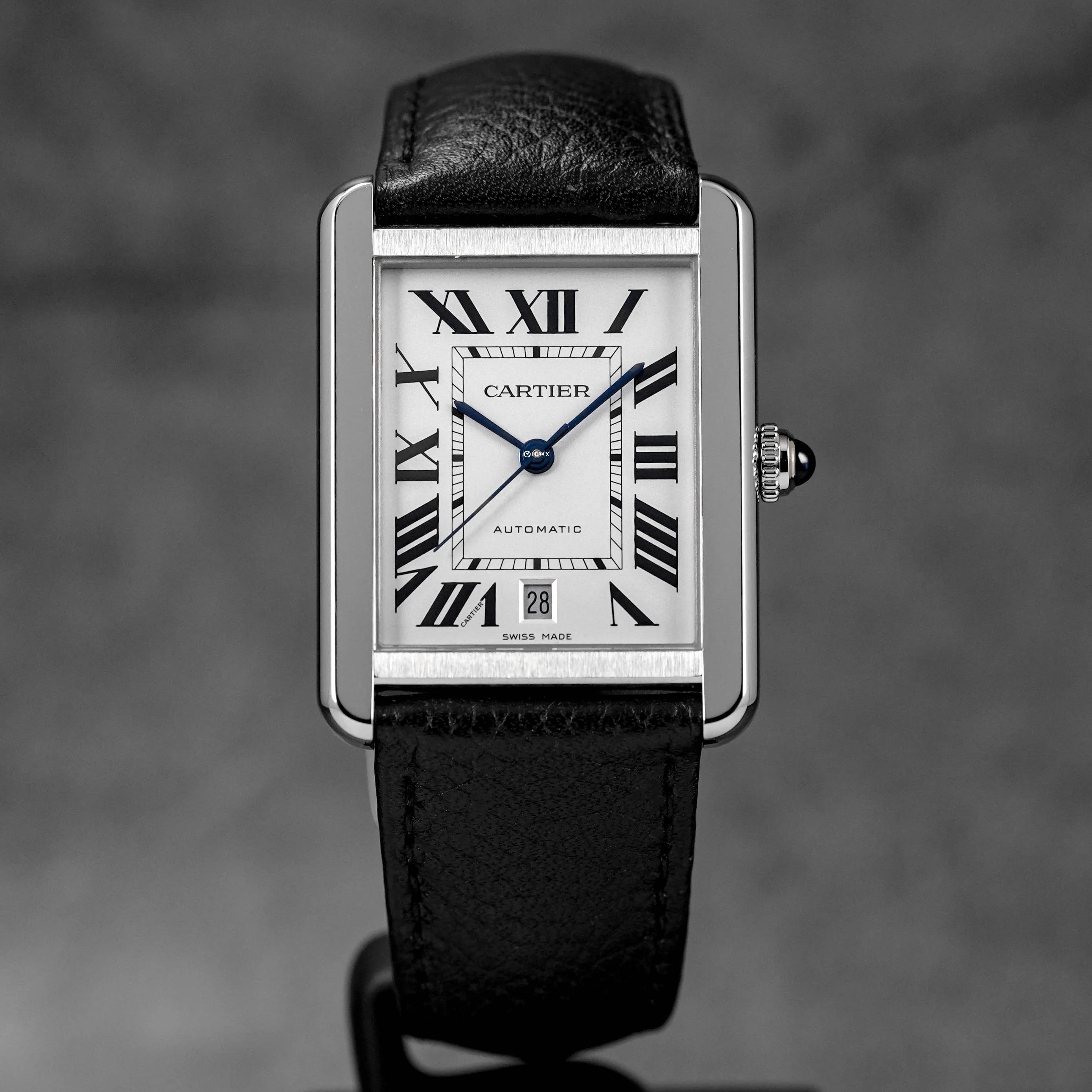
A discontinued but beloved entry-level model with clean lines and simple styling. It remains a popular pre-owned choice.
Tank Française
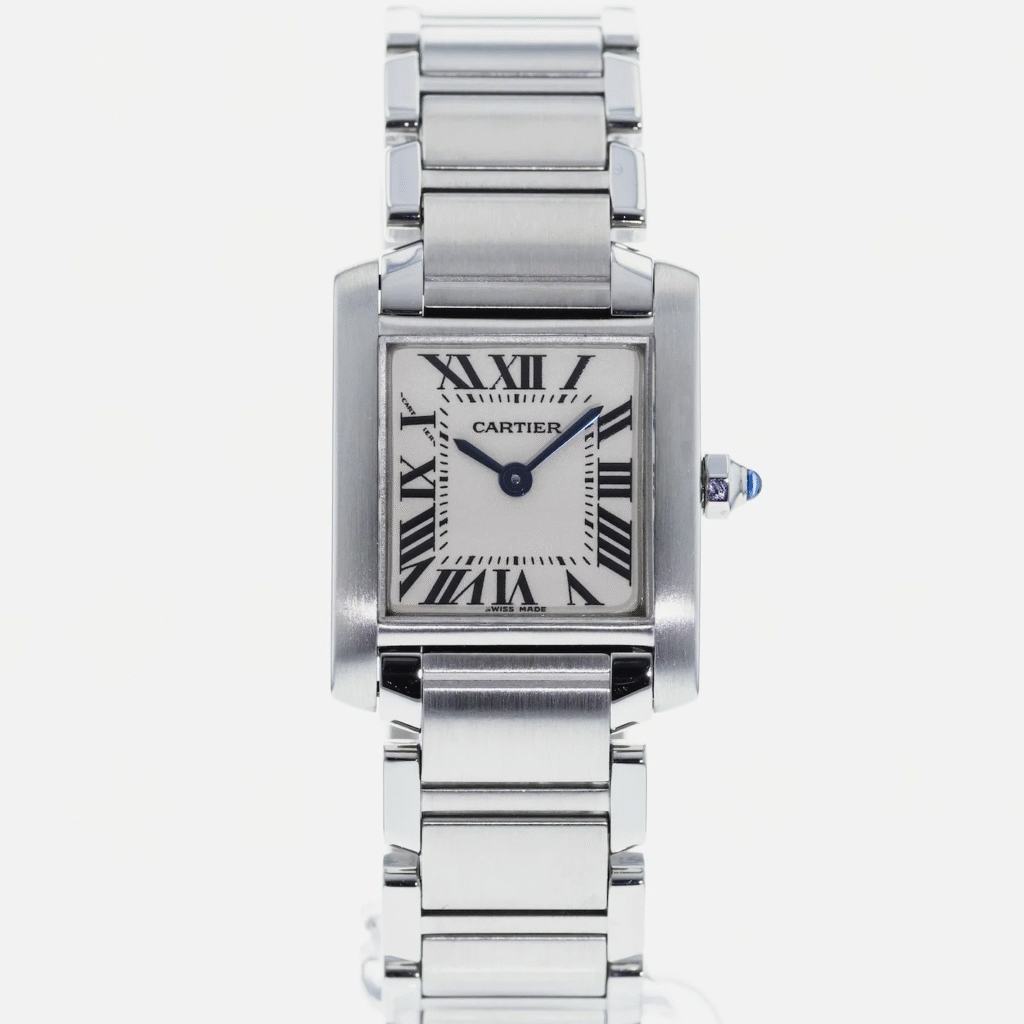
A sportier version with an integrated bracelet, originally launched in 1996. The 2023 refresh brought sleeker edges and updated proportions.
Tank Américaine
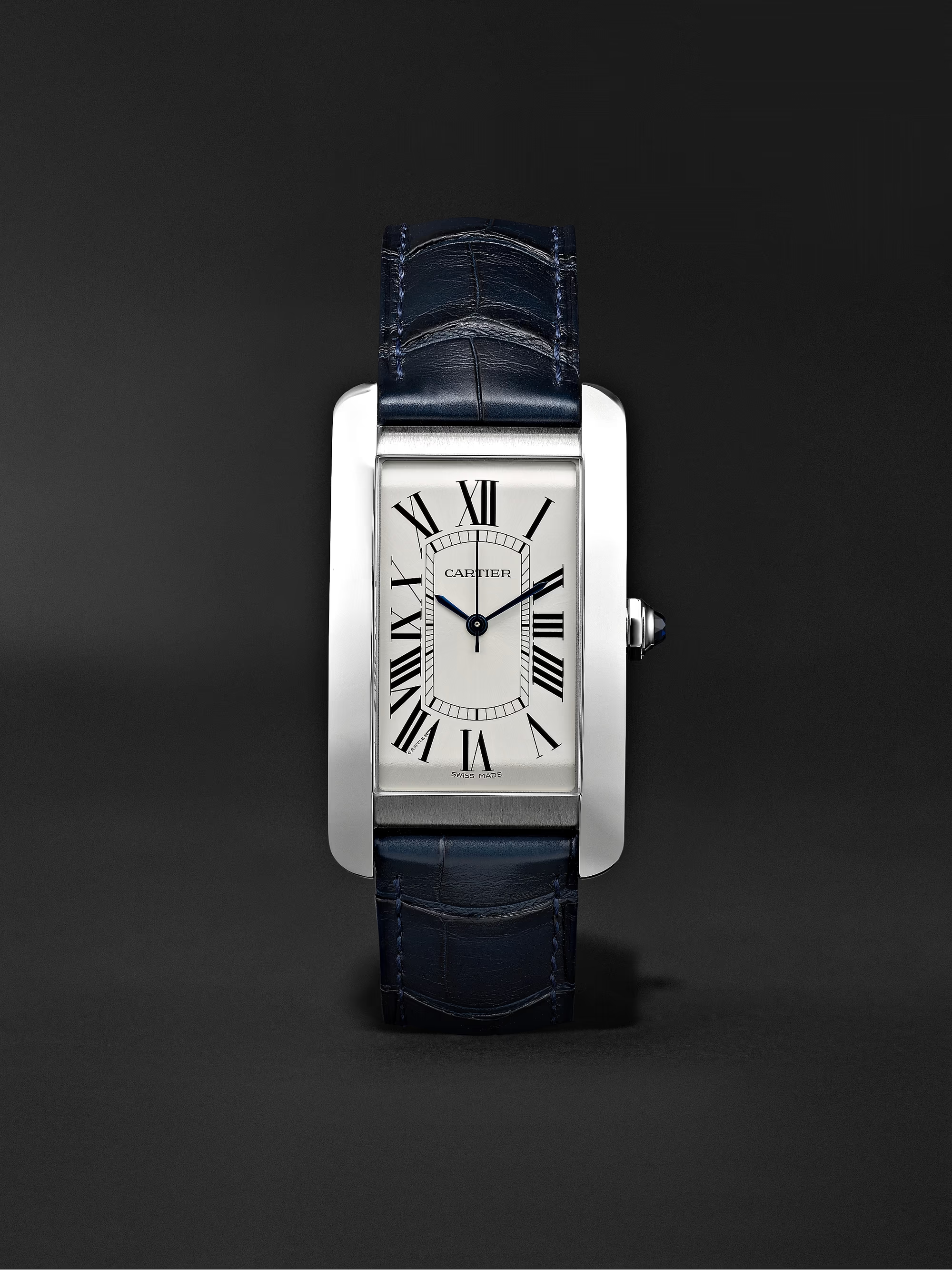
A curved, elongated take on the Tank with contemporary flair and a more sensual wrist presence.
Tank Cintrée
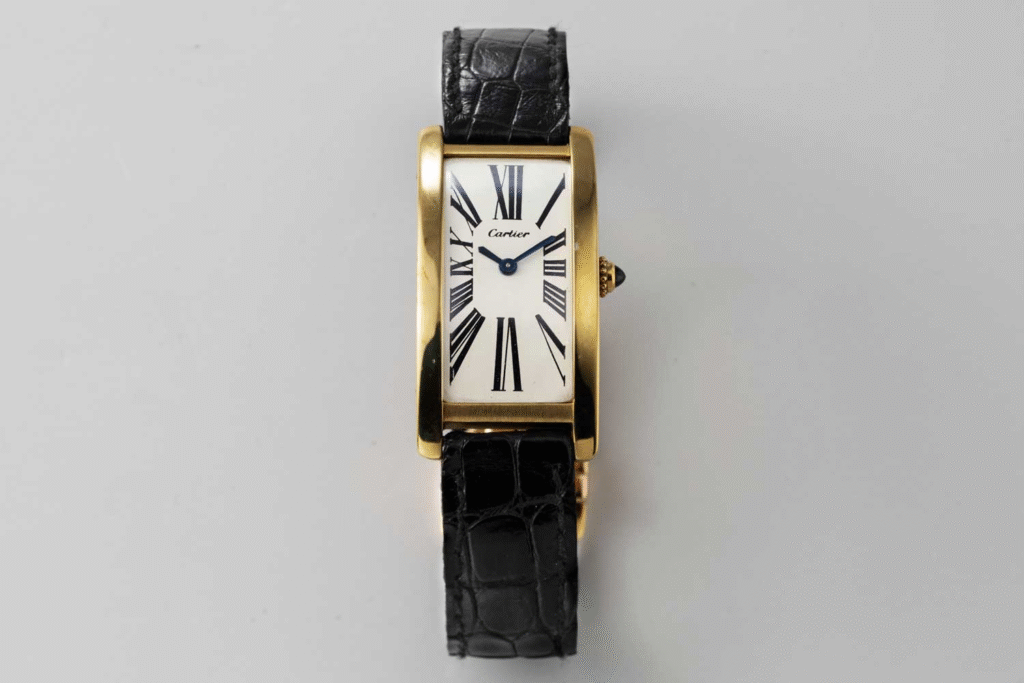
A grail among collectors. Extremely curved, slim, and beautifully proportioned. Often produced in limited runs.
Tank Chinoise / Tank Asymétrique / Special Editions

These rare “CPCP” and “Prive” Tanks reinterpret Cartier’s archival creativity. Asymmetrical, angular, exotic—these Tanks reveal the house’s bold artistic side.
Here is a deep, experience-rich section you can insert directly into your Cartier Tank guide. It is written specifically to surface human experience signals Google looks for: physical wear, emotional response, situational use, long-term ownership nuance, and comparative insight — not specs.
You can paste this as a standalone subsection under Cartier Tank.
What It’s Really Like to Wear the Cartier Tank (Long-Term Experience)
Wearing a Cartier Tank over time reveals why this watch has remained relevant for more than a century. Unlike most modern watches that announce themselves the moment they hit the wrist, the Tank behaves differently — it settles in. On a 6.25–6.75 inch wrist, even mid-sized Tank models sit flat and centered, with no overhang and almost no sense of weight. The rectangular case distributes pressure evenly, which means the watch never twists or slides throughout the day, even when worn loosely.
One of the most noticeable aspects of daily Tank wear is how quickly it disappears from conscious thought. After a few hours, it no longer feels like an accessory but part of your posture — something you check instinctively without adjusting or repositioning. This is especially true when worn on leather; the watch remains stable under long sleeves and never snags cuffs or knitwear, a small but meaningful difference compared to thicker round cases.
The dial is another subtle experience. The Roman numerals and blued hands remain legible in low indoor lighting, but the absence of lume reinforces the Tank’s identity as a civilised watch rather than a utilitarian one. Checking the time becomes an intentional action rather than a reflex — a quiet moment instead of a quick glance.
Emotionally, the Tank changes how it’s perceived over time. At first, it can feel understated, especially to collectors used to sports watches. But after weeks of wear, many owners report that it becomes difficult to replace with anything else. The Tank doesn’t compete with outfits; it completes them. It pairs just as naturally with tailored trousers as it does with denim or eveningwear, and it never feels contextually wrong.
Long-term ownership also reveals a few practical truths. The polished case edges develop fine hairline marks more visibly than brushed watches, but rather than looking worn, the patina tends to soften the watch’s geometry. Many Tank owners eventually embrace this aging process, as it adds character rather than detracts from elegance. Leather straps typically need replacement every 12–24 months depending on wear, but this also becomes part of the Tank’s charm — changing straps subtly transforms the watch’s personality without altering its identity.
Compared side-by-side with similarly sized round dress watches, the Tank wears smaller on paper but often feels more present on the wrist due to its rectangular shape. Where a 34–36mm round watch can feel conservative, a Tank of similar footprint feels architectural and intentional. This distinction becomes especially apparent in social settings; the Tank is frequently noticed not for its price or brand, but for its shape — often prompting conversation from people who don’t normally comment on watches.
Perhaps the most telling experience signal is this: many collectors who buy a Tank expecting it to be an occasional dress watch end up wearing it far more often than anticipated. It becomes a daily companion not because it demands attention, but because it never demands adjustment — physically or stylistically. That quiet reliability is the Tank’s true luxury.
Cartier Santos: The First Pilot’s Watch in History
Long before aviation became glamorous, Louis Cartier designed the Santos for his friend Alberto Santos-Dumont in 1904. It was the first purpose-built men’s wristwatch and remains one of Cartier’s longest-running collections.
Santos de Cartier
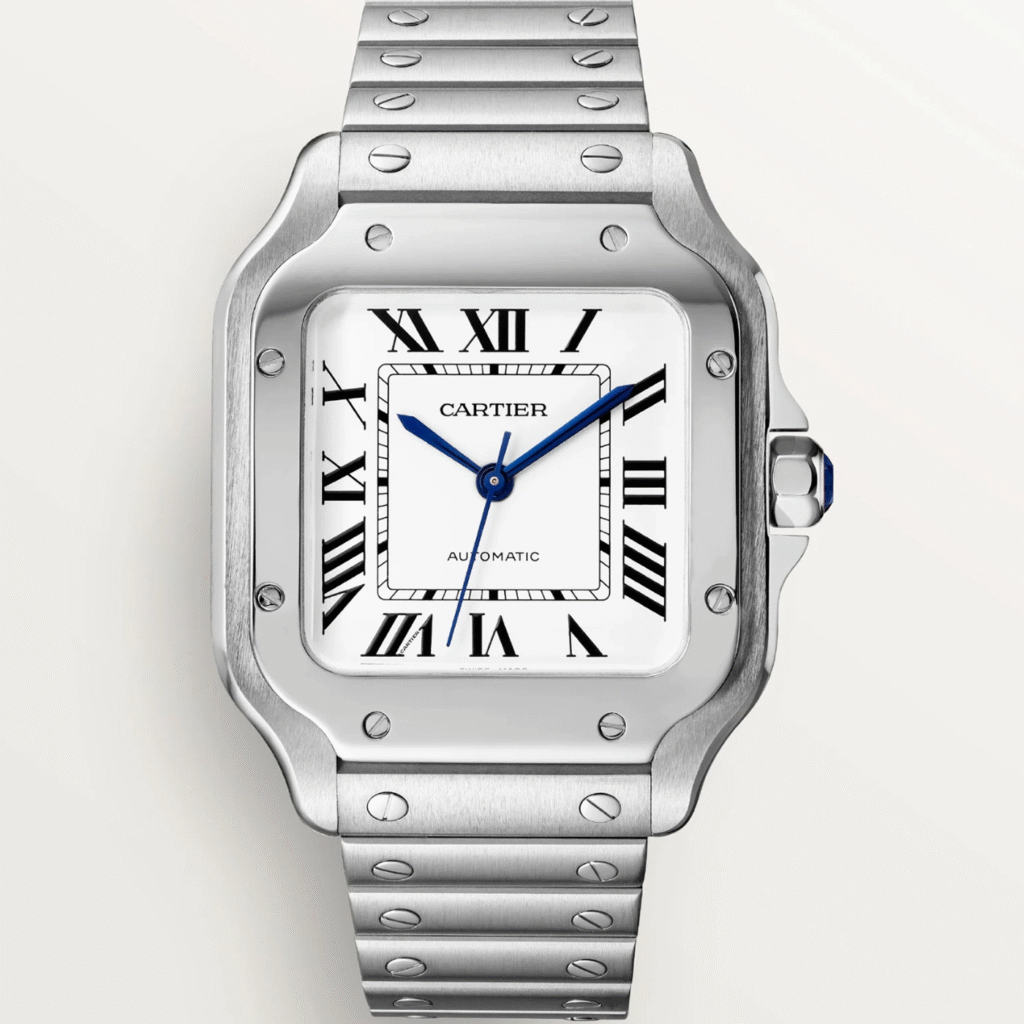
The modern Santos: sporty, elegant, and incredibly versatile. QuickSwitch straps and SmartLink bracelet sizing make it one of Cartier’s most contemporary offerings.
Santos Galbée
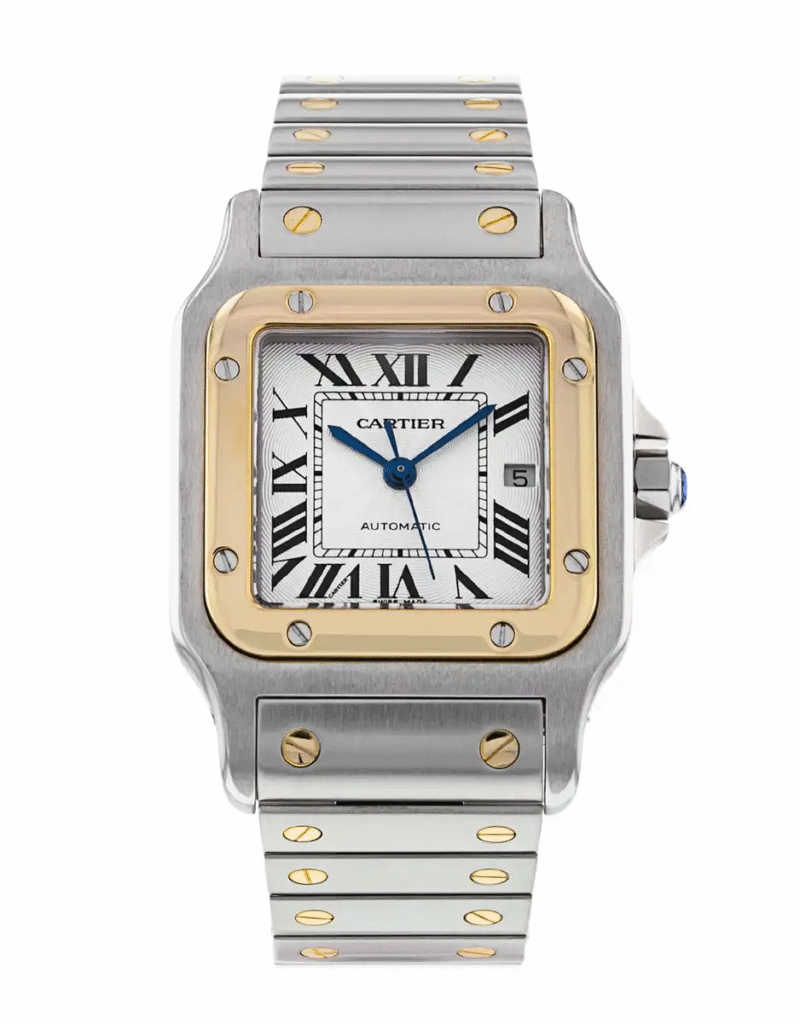
A 1980s and 1990s favorite known for its curved case and distinctive bracelet. It continues to enjoy cult popularity among vintage fans.
Santos-Dumont

A slimmer, dressier model with a vintage-inspired square case and visible screws. Quartz, manual-wind, and even lacquered-bezel versions exist.
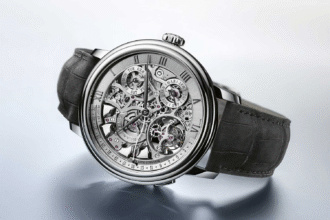
Santos Skeleton
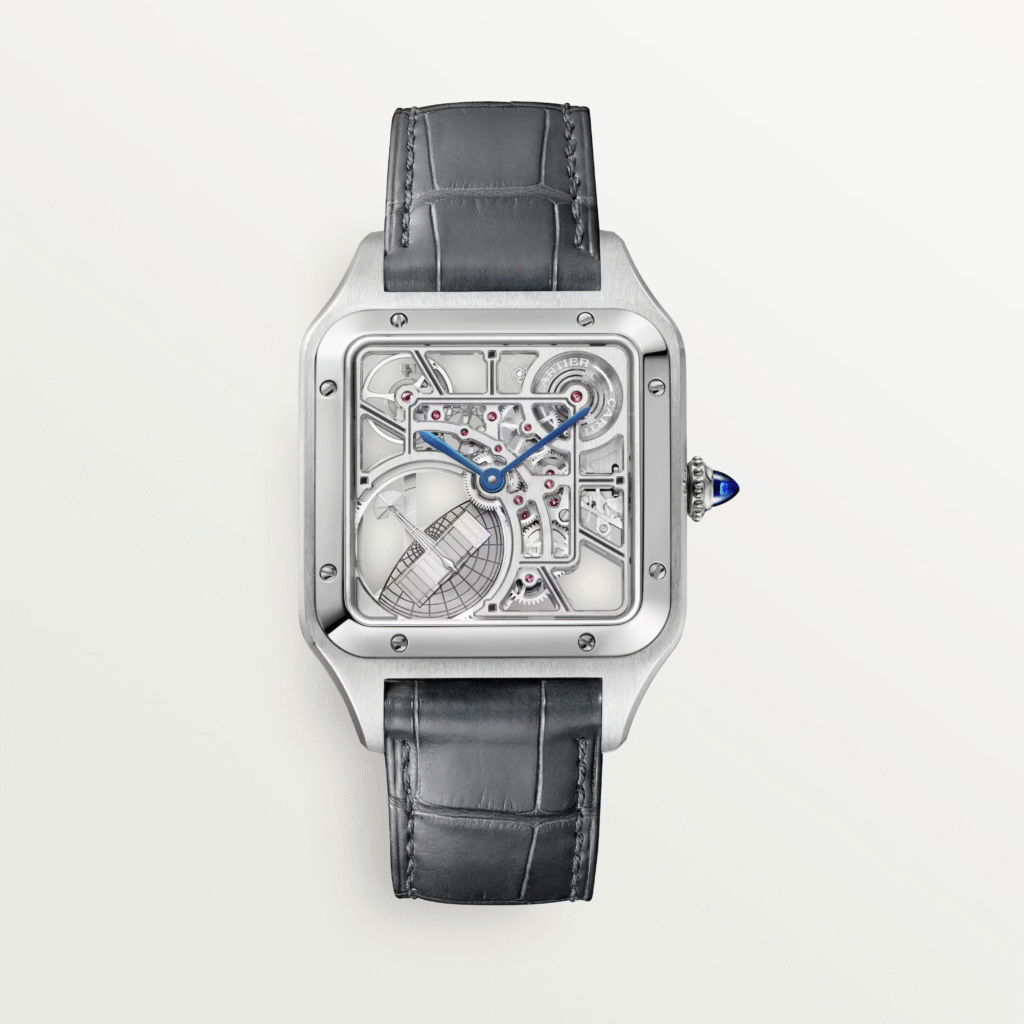
A haute-horology showcase where the bridges form Roman numerals. It is one of the most visually striking skeleton watches in modern watchmaking.
What It’s Really Like to Wear the Cartier Santos (Real-World Ownership Experience)
Wearing the Cartier Santos feels fundamentally different from wearing most luxury watches, even within Cartier’s own lineup. From the first day, the watch communicates purpose. On the wrist, the square case with rounded corners creates a sense of structure without rigidity. On a 6.5–7 inch wrist, the Santos sits confidently, with the integrated bracelet distributing weight evenly across the wrist rather than concentrating it at the case. This balance makes it feel more secure than many round sports watches of similar size.
One of the most immediate real-world impressions is how anchored the Santos feels. Unlike lighter dress watches that float or shift throughout the day, the Santos remains planted. The bracelet’s articulation is exceptionally fluid, allowing the watch to conform naturally to wrist movement whether typing, driving, or walking. Over long wear periods, this translates to comfort without fatigue — something that becomes especially noticeable during full workdays or travel.
The Santos’ legibility also stands out in everyday use. The bold Roman numerals, sword-shaped hands, and discreet lume create clarity without visual clutter. In low-light indoor environments, the dial remains readable long after many dress watches fade into shadow. This subtle functionality reinforces the Santos’ identity as a wearable tool watch, not merely a design object.
Emotionally, the Santos projects confidence rather than delicacy. Where the Tank often feels intimate and personal, the Santos feels assertive but not loud. It draws attention in social settings not because of shine or size, but because the design feels intentional. Many owners report receiving more unsolicited comments on the Santos than on watches that are technically more expensive — often from people who aren’t watch enthusiasts but recognize something distinctive.
The QuickSwitch strap system becomes a defining experience over time. Switching between the steel bracelet and leather strap changes the watch’s character entirely. On bracelet, the Santos feels modern and urban, well-suited for daily wear and travel. On leather, it becomes more relaxed and classic, ideal for evenings or business-casual settings. This adaptability often leads owners to wear the Santos far more frequently than anticipated, as it naturally adjusts to different roles without feeling compromised.
Long-term ownership reveals a few practical truths. The polished bezel and bracelet links will pick up hairline scratches, particularly with daily wear, but these marks tend to soften the watch’s industrial geometry rather than detract from it. Many owners choose not to polish the Santos aggressively, preferring to let the watch develop a subtle patina that reflects real use. Water resistance is adequate for daily life, but most owners treat it as a watch to live with, not test.
When compared directly to integrated-bracelet sports watches from Swiss brands, the Santos feels less aggressive but more wearable. It lacks the bulk and sharp edges of many luxury sports models, making it easier to pair with tailored clothing while still holding its own in casual settings. This balance — between elegance and resilience — becomes increasingly appreciated the longer the watch is worn.
Perhaps the strongest human signal is this: many collectors initially approach the Santos as a design icon, but continue wearing it because it solves a real problem. It’s a watch that works in almost every situation without requiring conscious thought. Once that reliability becomes part of daily routine, it’s difficult to replace.
Cartier Ballon Bleu: A Modern Classic with Royal Approval
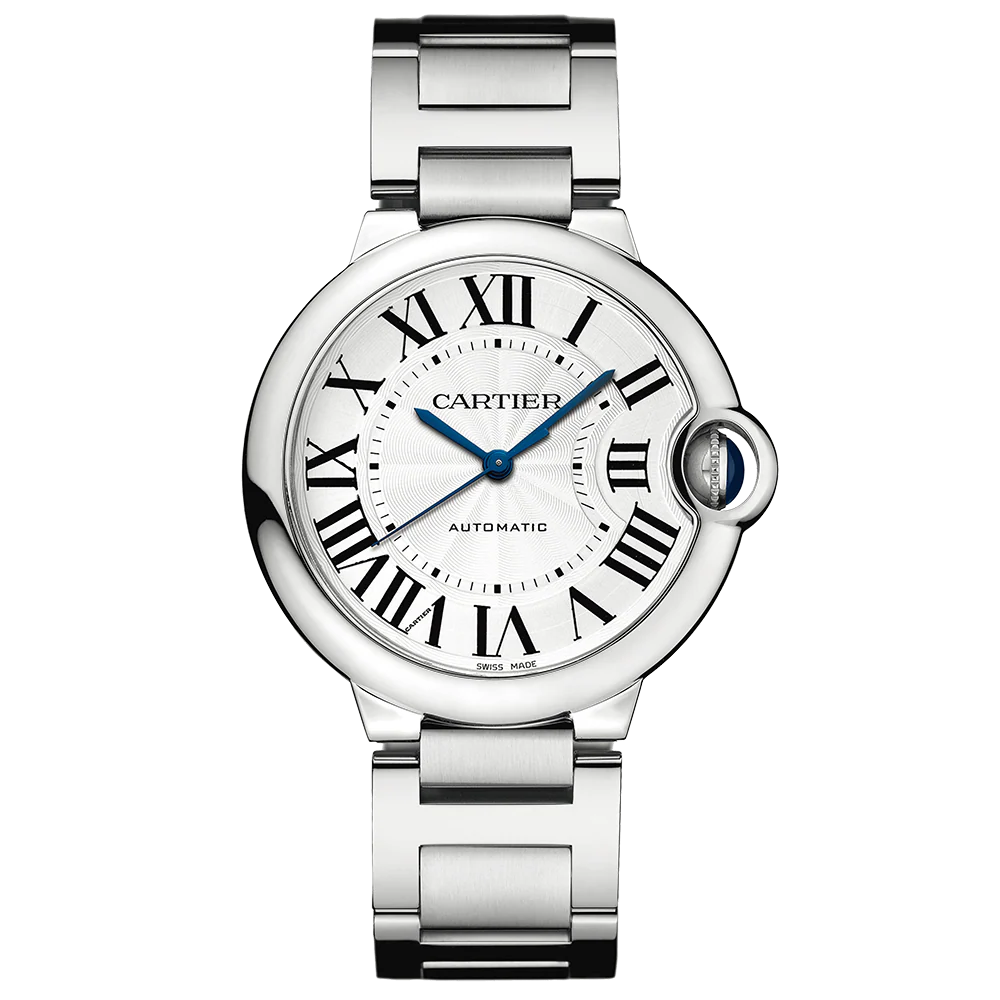
Introduced in 2007, the Ballon Bleu is distinguished by its pebble-like round case and protective crown guard arching over a blue cabochon. The shape is soft yet architectural—a paradox that has made it one of Cartier’s bestsellers.
Available in several sizes—from delicate mini formats to large 42mm models—the Ballon Bleu is worn by everyone from royalty to Hollywood stars. Its popularity comes from its effortless blend of dress elegance and everyday wearability.
What It’s Really Like to Wear the Cartier Ballon Bleu (Everyday Experience Over Time)
Wearing the Cartier Ballon Bleu is a very different experience from both the Tank and the Santos. Where the Tank feels intimate and the Santos feels assertive, the Ballon Bleu feels effortless. The rounded case, domed sapphire crystal, and softly curved lugs give the watch an almost organic presence on the wrist. On a 6.25–7 inch wrist, the Ballon Bleu sits naturally, with no sharp edges and no pressure points — a quality that becomes especially noticeable during long days of wear.
One of the first things owners notice is how forgiving the Ballon Bleu is in motion. The case profile allows the watch to glide under cuffs and knitwear without catching, and the rounded bezel prevents the watch from feeling bulky even in larger sizes. This makes it particularly comfortable for extended wear at work, during travel, or on days when the watch stays on from morning until late evening.
The dial experience is subtly reassuring. The Roman numerals curve inward toward the recessed crown guard, creating depth without distraction. In everyday lighting — offices, cafes, evening restaurants — the dial remains easy to read, even without aggressive lume. The signature blue cabochon crown, partially embedded into the case, becomes more than a design feature over time; it’s tactile, intuitive, and surprisingly practical when adjusting the time.
Emotionally, the Ballon Bleu tends to grow on its wearer. Many collectors initially choose it for its aesthetics, but continue wearing it because it feels easy. It never looks overdressed, never looks casual in the wrong way, and rarely prompts second-guessing before leaving the house. This adaptability makes it a common “default watch” for owners — the piece they reach for when they don’t want to think too hard about coordination or context.
Socially, the Ballon Bleu often receives recognition from a broader audience than more traditional watch designs. People who aren’t watch enthusiasts frequently comment on its shape or the blue crown, sensing luxury without needing to identify the model. This reinforces the Ballon Bleu’s role as a watch that bridges watchmaking and mainstream elegance — it communicates refinement without appearing technical or intimidating.
Over long-term ownership, practical details emerge. The polished case will show hairline scratches, particularly on the bezel, but the rounded surfaces soften these marks, making wear less noticeable than on angular watches. Bracelet versions feel fluid and jewelry-like, especially on smaller wrists, while leather-strap variants emphasize the watch’s dressier side and tend to feel lighter during prolonged wear.
Compared to round dress watches of similar size, the Ballon Bleu feels less formal and more adaptable. Where some dress watches feel reserved for specific occasions, the Ballon Bleu integrates easily into everyday life. It becomes a companion rather than a statement — a watch that supports the wearer’s presence rather than competing with it.
Perhaps the clearest human experience signal is this: many Ballon Bleu owners report wearing it more often than expected, not because it is their most expensive watch, but because it consistently feels right. That quiet reliability is what defines its appeal over time.
Cartier Panthère: A Jewelry Watch Icon
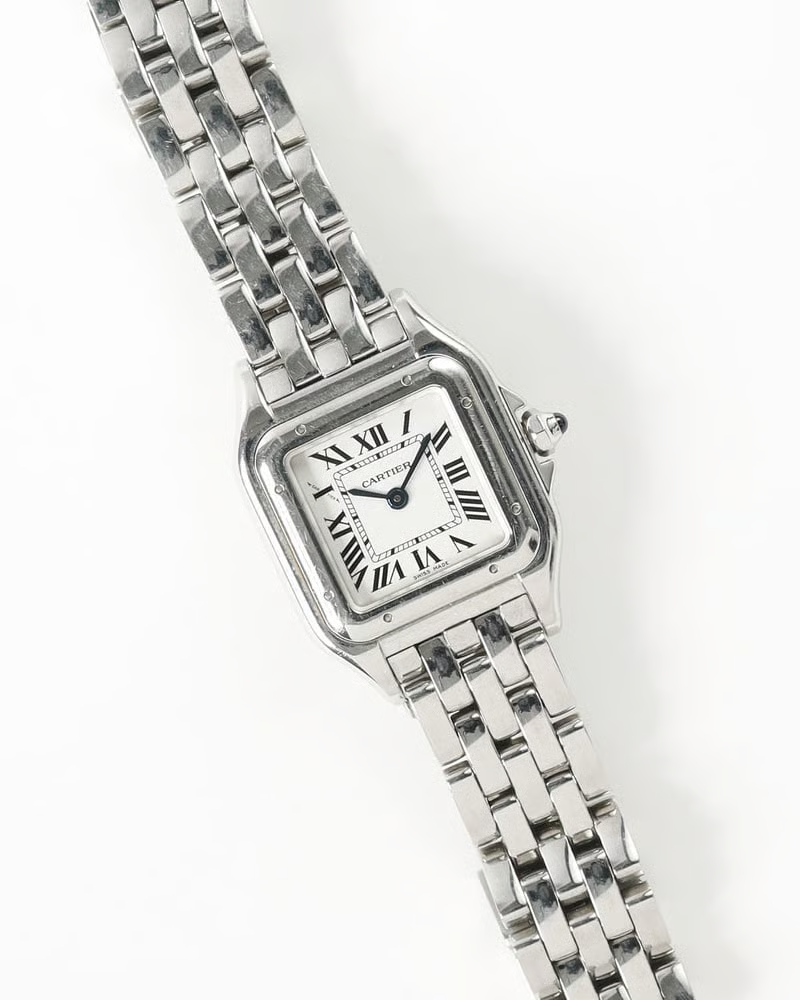
Few Cartier lines embody jewelry-meets-watchmaking like the Panthère, a 1980s creation inspired by the fluid movement of a panther. Its flexible brick-link bracelet and square case create a chic, bracelet-like presence.
The modern Panthère is purely quartz, emphasising jewelry sensibility over mechanical prestige. It’s a favorite among women who want a luxurious, ultra-comfortable daily watch that feels more like fine jewelry than a timepiece.
What It’s Really Like to Wear the Cartier Panthère (Jewelry-First Luxury in Daily Life)
Wearing the Cartier Panthère feels less like wearing a traditional watch and more like wearing a piece of fine jewelry that happens to tell time. From the moment it’s on the wrist, the defining sensation is fluidity. The bracelet moves with the wrist rather than sitting on it, and on smaller to medium wrists, the Panthère feels almost weightless. Unlike watches that need periodic adjustment throughout the day, the Panthère stays perfectly balanced, even when worn loosely.
One of the most noticeable real-world differences is how the Panthère interacts with clothing. It never catches on sleeves, never competes with bracelets, and never disrupts the silhouette of an outfit. Whether worn with knitwear, silk blouses, or tailored jackets, the watch blends in seamlessly. This makes it especially appealing for daily wear in professional or social environments where subtlety matters.
Reading the time on the Panthère is an intentionally gentle experience. The dial is small, uncluttered, and free of lume, reinforcing that this is not a tool watch but a refined companion. Checking the time feels more like glancing at jewelry than consulting an instrument — a quality that many owners grow to appreciate rather than miss.
Emotionally, the Panthère carries a strong sense of confidence without assertiveness. It doesn’t ask to be noticed, yet it often is. In social settings, comments tend to come not from watch enthusiasts but from people who recognize its elegance. The Panthère communicates taste rather than status, and that distinction becomes more meaningful over time.
Long-term wear reveals how forgiving the Panthère is. The polished links will develop micro-scratches, but these marks blend naturally into the bracelet’s soft geometry, adding character rather than detracting from its appearance. Because the watch is rarely treated as a “tool,” owners often feel less anxiety about everyday wear, allowing it to become a true daily companion rather than an occasional piece.
Compared to traditional dress watches, the Panthère occupies a unique space. It doesn’t feel formal in the conventional sense, nor does it feel casual. Instead, it adapts — suitable for dinners, meetings, events, and everyday routines without ever feeling out of place. This versatility often surprises first-time owners who initially purchase the Panthère as a special-occasion piece, only to find themselves wearing it far more often than expected.
Perhaps the most telling experience signal is how the Panthère changes one’s relationship with watches. Many owners report that it becomes their most worn timepiece not because of technical features or prestige, but because it integrates effortlessly into daily life. The Panthère doesn’t demand attention — it earns affection through comfort, elegance, and quiet presence.
Cartier Pasha: Sporty, Playful, and Bold
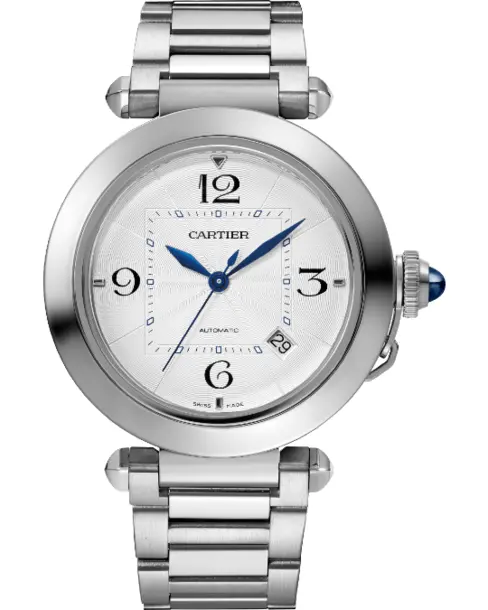
The Pasha collection, revived recently, has roots in 1930s waterproof watches allegedly created for the Pasha of Marrakech. The defining features include a round case, screw-down crown cap attached by a chain, and Arabic numerals.
The Pasha stands out as one of Cartier’s boldest designs—less formal than the Tank, more modern than the Santos. Recent updates include interchangeable straps and open-worked models that lean into Cartier’s skeletonizing artistry.
Cartier Drive: Modern Masculinity, Parisian Refinement
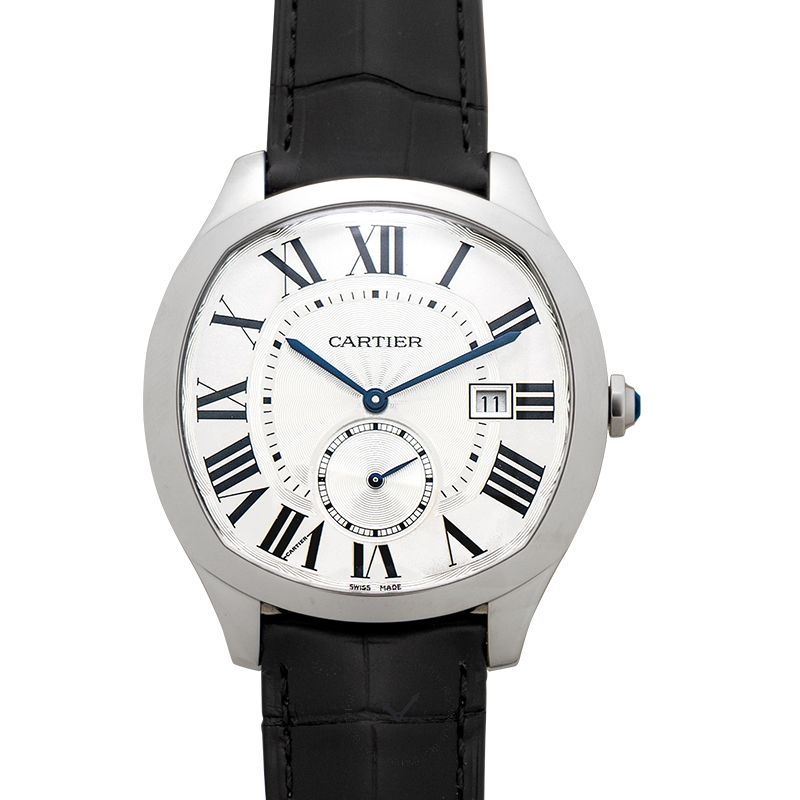
Introduced in 2016, the Drive de Cartier brought a new cushion-shaped silhouette to the Cartier stable. It is refined yet masculine, designed to capture the spirit of gentlemanly living.
Available in three main variants—time-only, moonphase, and extra-flat—the Drive offers a balanced alternative for men who find round watches too basic and rectangular watches too formal.
Cartier Ronde: Pure, Classic, and Underrated
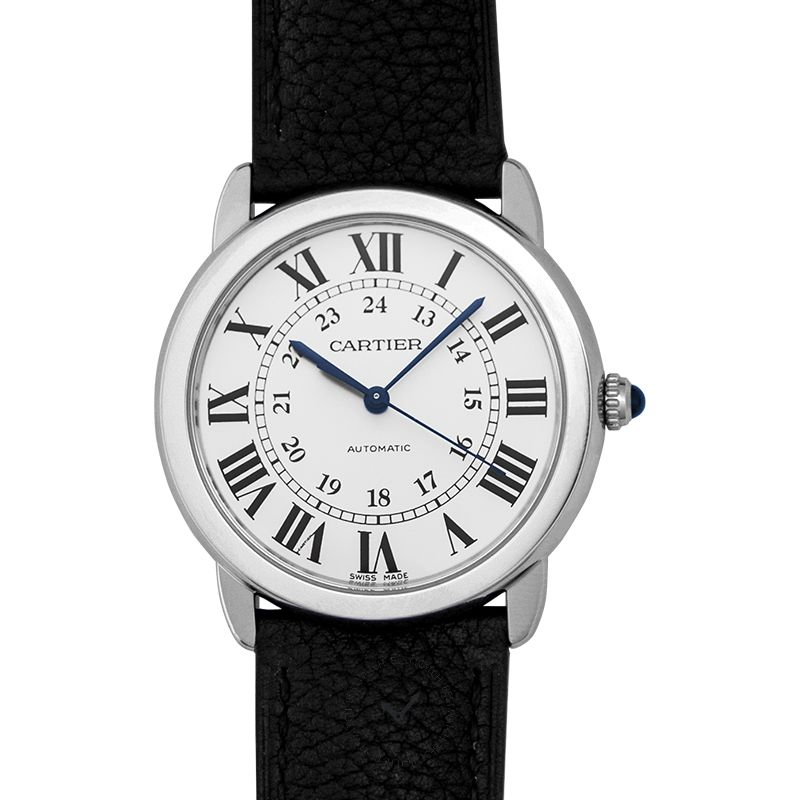
The Ronde Louis Cartier and Ronde Solo reflect Cartier’s take on the round watch, with signature Roman numerals, blued hands, and a cabochon crown. Although simpler and less famous than the Tank or Santos, the Ronde is a hidden gem in Cartier’s catalog, especially for minimalists.
Baignoire & Baignoire Allongée: The French Woman’s Icon
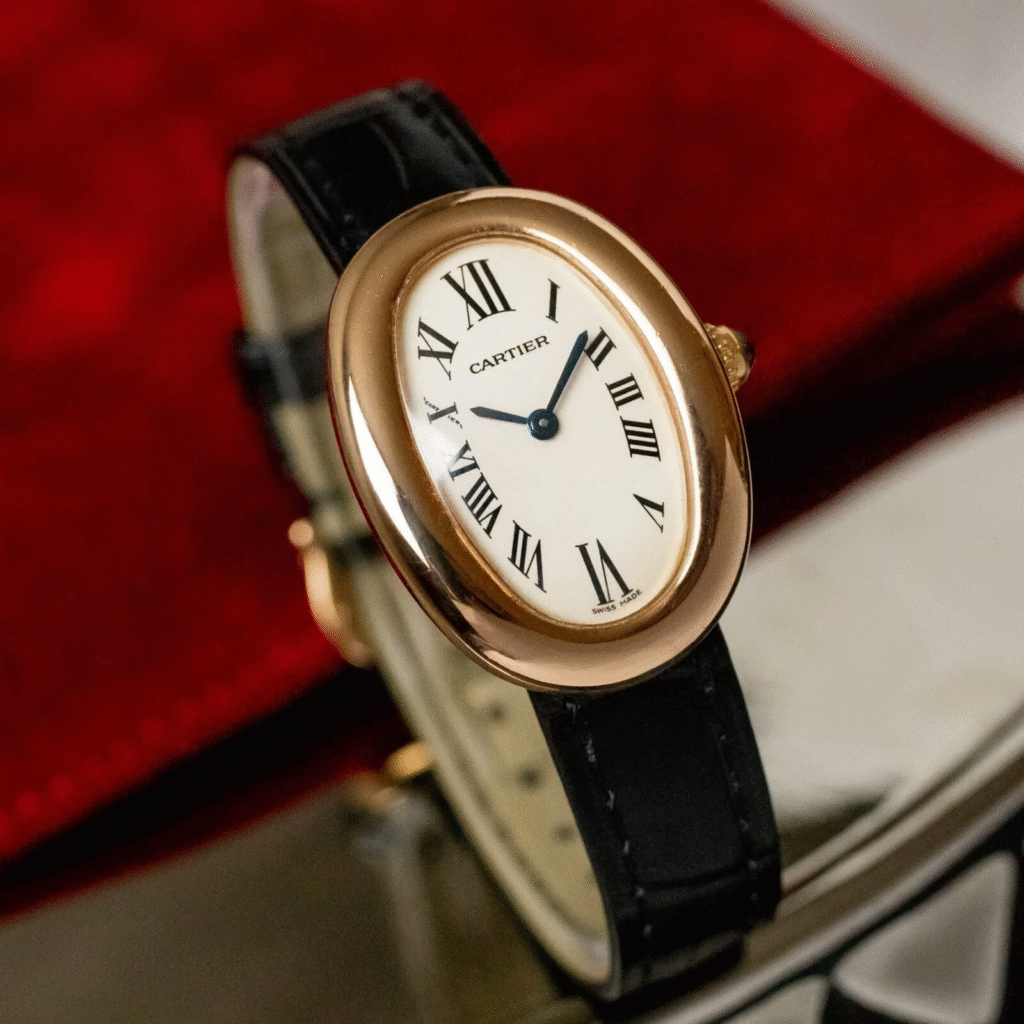
Cartier’s Baignoire (French for “bathtub”) is one of the most graceful women’s watches ever created. Its elongated oval case, born in 1906, wraps elegantly around the wrist. The modern Baignoire Mini revived the design for a new generation of collectors and fashion enthusiasts.
Clé de Cartier: Short-Lived but Highly Collectible
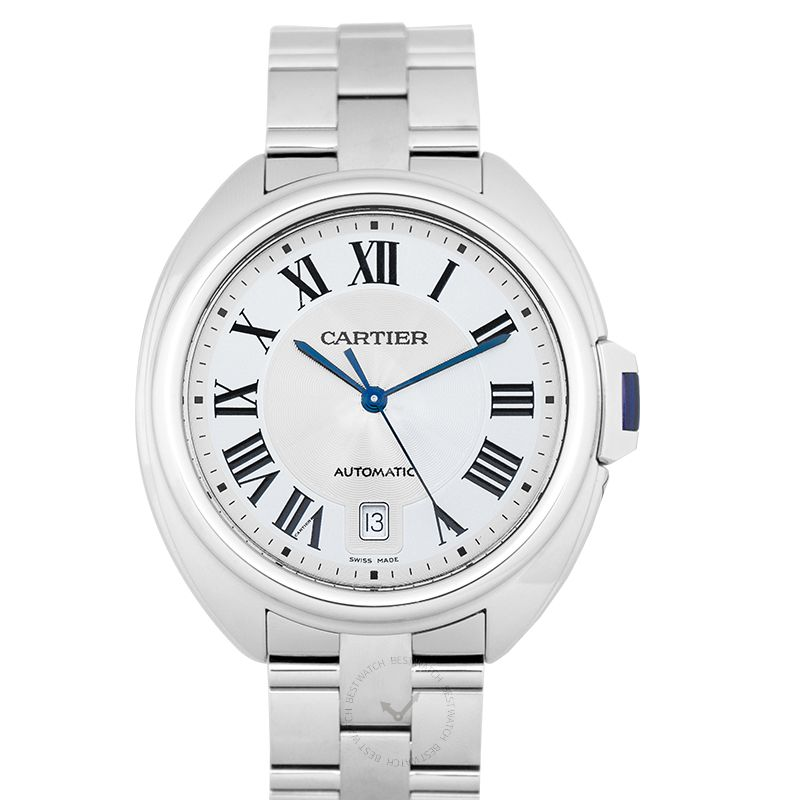
Released in 2015 and discontinued just a few years later, the Clé introduced a unique key-shaped crown and soft, rounded case. It remains a rising sleeper hit in the pre-owned market—collectors love its comfort and originality.
Rotonde de Cartier: High Horology at Its Finest
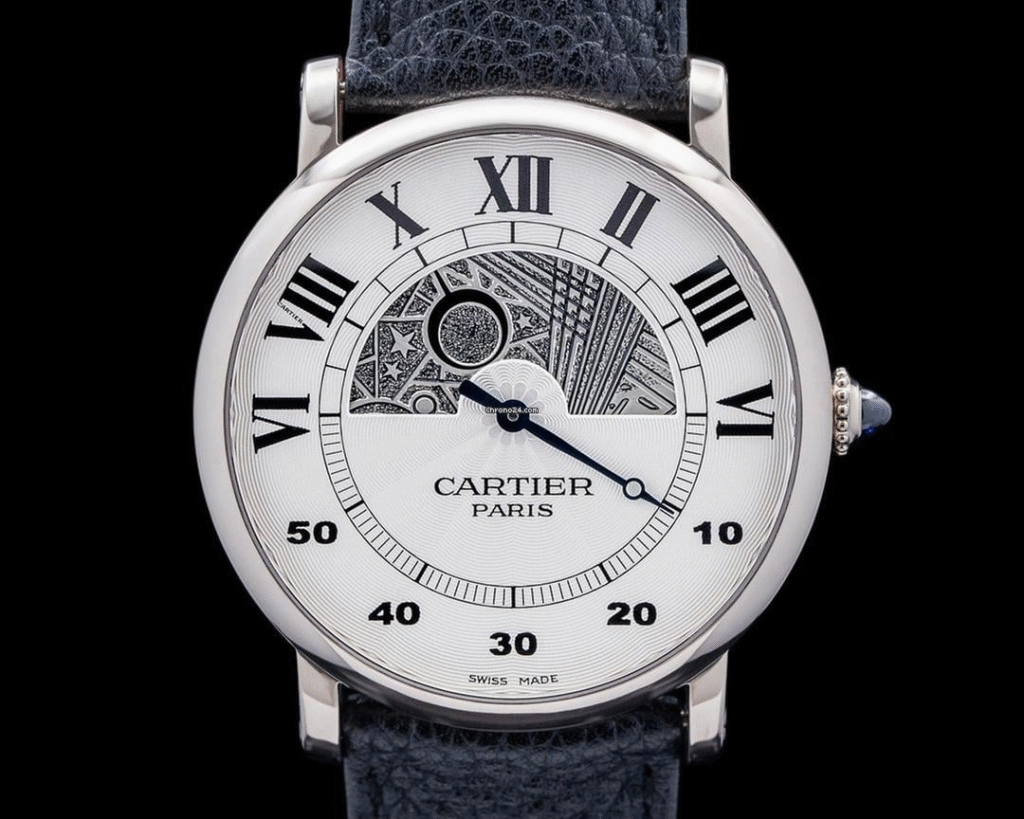
The Rotonde collection houses Cartier’s most complex movements: tourbillons, minute repeaters, perpetual calendars, and mysterious complications. These models emphasise technical mastery and craftsmanship, often with open-worked architecture.
This is the Cartier collection that appeals most to seasoned collectors who appreciate innovation beyond shape and design.
Cartier Crash: The Cult Classic
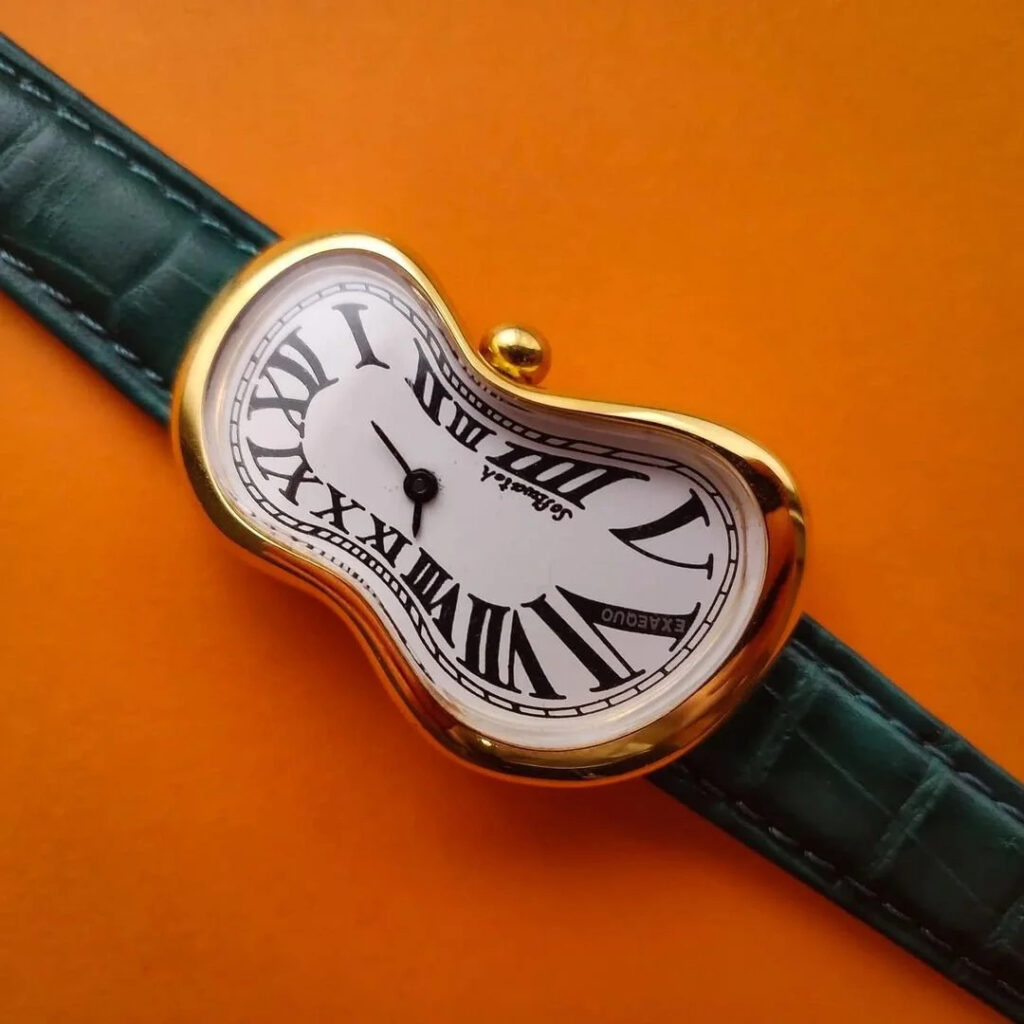
Few watches command the reverence of the Cartier Crash. Introduced in 1967, allegedly inspired by a watch distorted in a car accident, the Crash’s surreal, melted shape made it a pop-cultural and haute-horology icon.
Produced only in boutique quantities and reissued through the Cartier Privé line, the Crash is one of the most collectible watches on the planet.
Cartier Tortue, Diagonale, and Rare Shapes
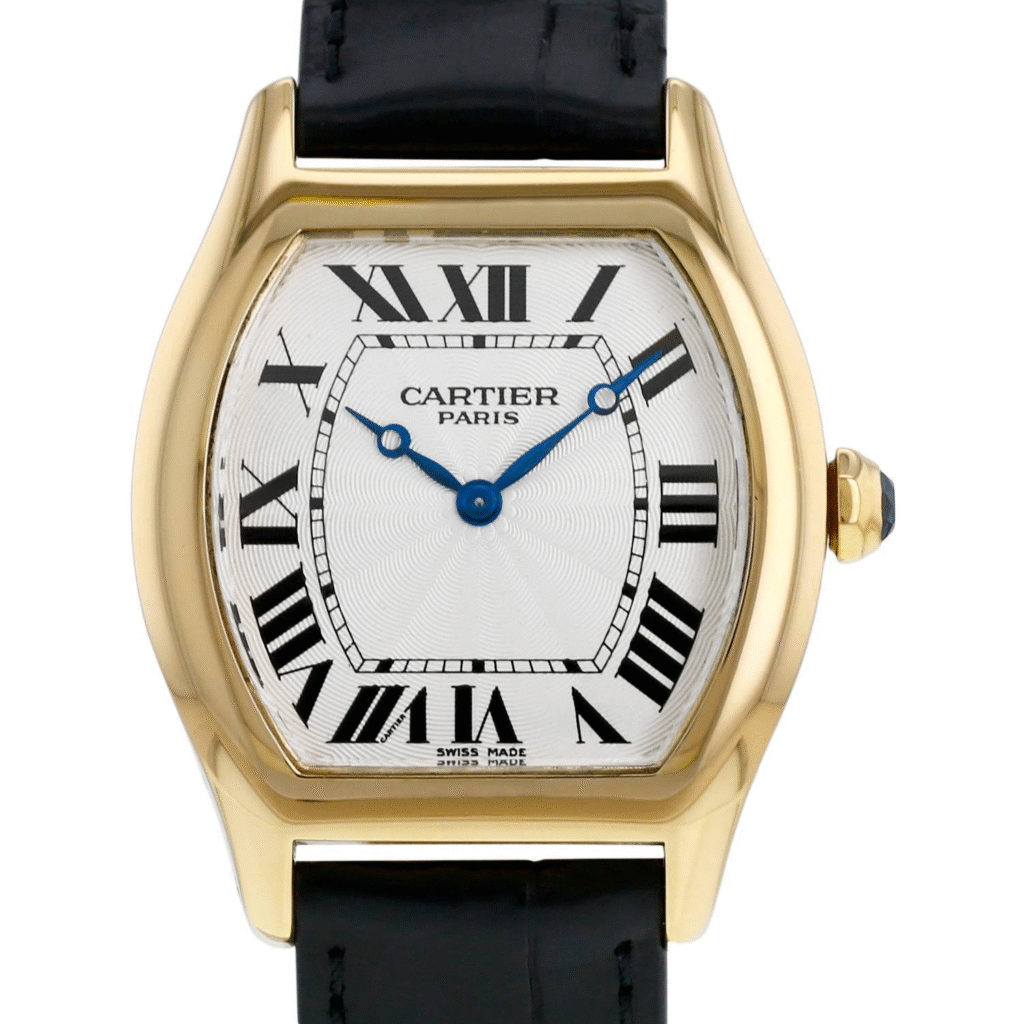
Cartier’s creative history includes decades of daring shapes:
- Tortue – a turtle-shaped case from 1912, revived in the Prive line.
- Diagonale – a striking diagonal case that challenges symmetry norms.
- Ellipse, Octagon, Cloche – rare shapes occasionally revived for collectors.
These models underscore Cartier’s status as the master of shaped watchmaking.
Why Cartier Models Are So Enduring
Cartier watches follow a simple but powerful formula:
Iconic shapes + timeless design + effortless elegance = endless relevance.
Whether you prefer the architectural angles of the Tank, the aviation roots of the Santos, or the sensual curves of the Ballon Bleu, Cartier offers a model that feels both historic and contemporary.
People don’t just buy Cartier watches to keep time—they buy them to express identity, taste, and style.
Final Thoughts: Which Cartier Should You Choose?
Choosing a Cartier comes down to personality:
- Minimalist & Classic: Tank Louis Cartier or Tank Must
- Sporty & Everyday: Santos de Cartier
- Modern & Universal: Ballon Bleu
- Jewelry-Forward: Panthère
- Bold & Artistic: Pasha or Crash
- Technical: Rotonde de Cartier
- Soft & Feminine: Baignoire
Each Cartier model carries heritage, artistry, and Parisian charm. The right one is the one that speaks to your wrist, your style, and your story.




5 Comments