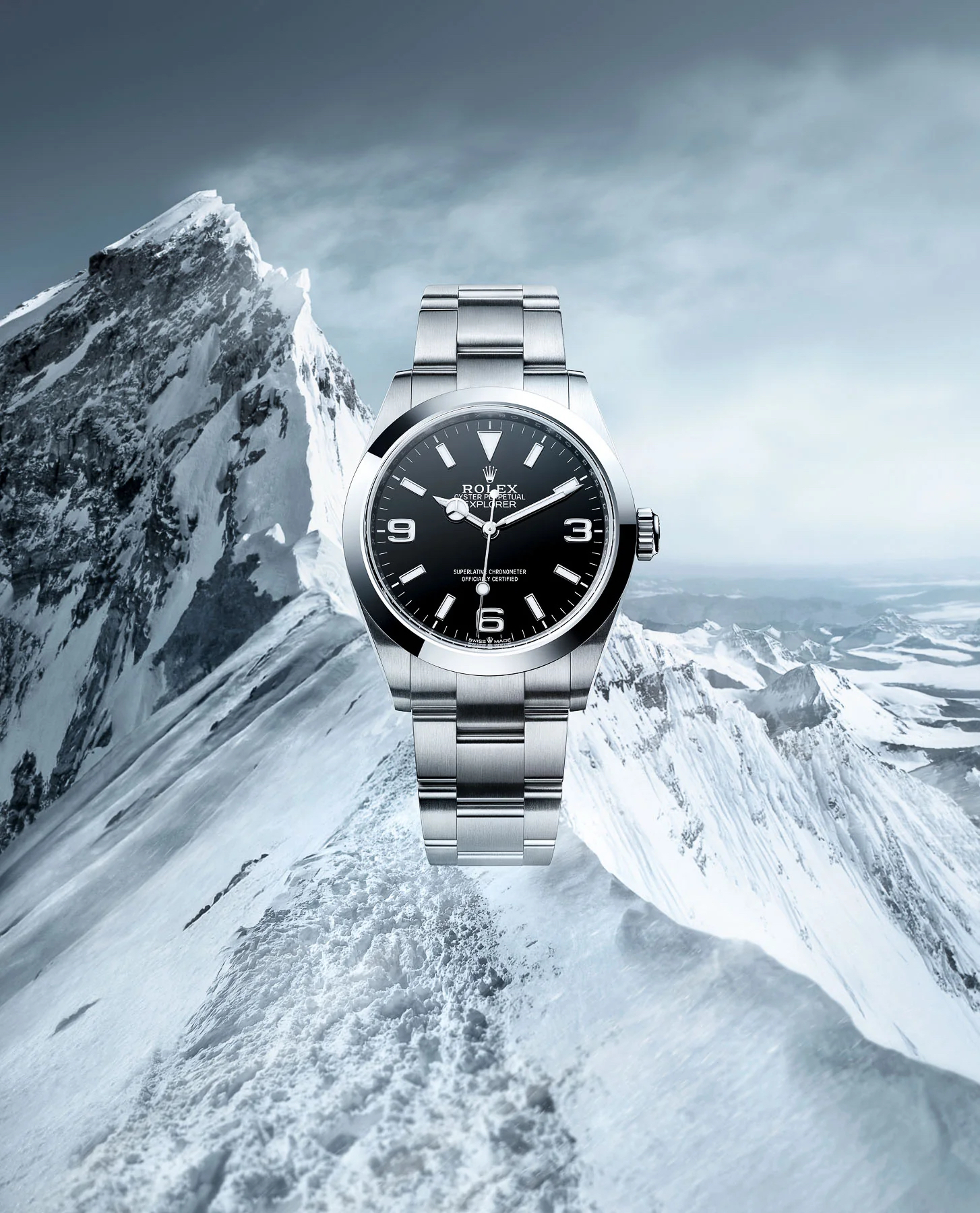
Few watches carry as storied a legacy of adventure and endurance as the Rolex Explorer. Originally born from the 1953 ascent of Mount Everest, the Explorer embodies the spirit of exploration — and its story remains one of horology’s most compelling narratives.
The Ascent: Rolex and Everest in 1953
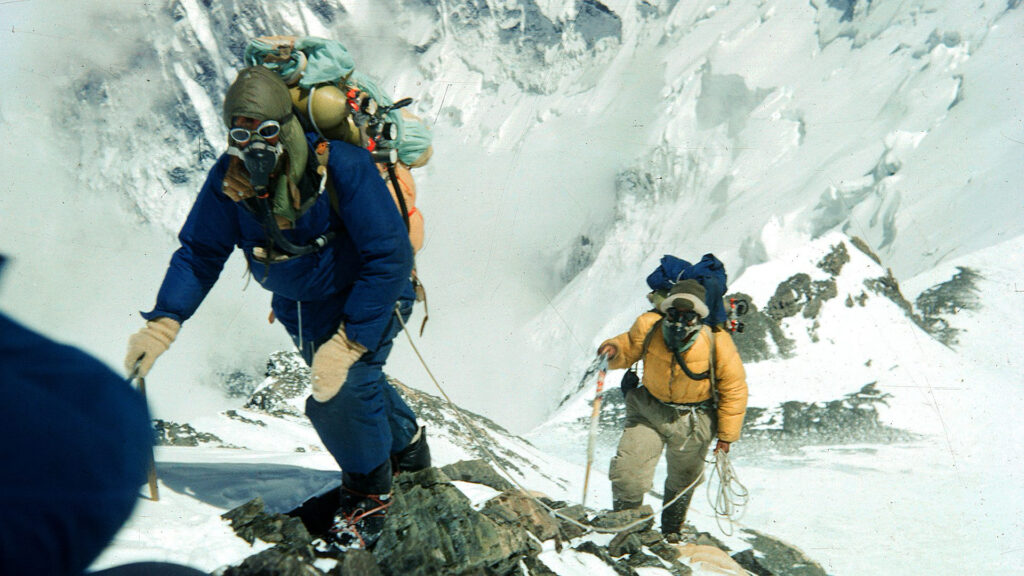
In the history of watchmaking and mountaineering, 1953 stands out. On May 29, Sir Edmund Hillary and Tenzing Norgay reached the summit of Everest. That same year, the watchmaker Rolex provided the expedition with Oyster Perpetual timepieces.
The Explorer was officially introduced later that year, inspired by what the expedition’s watches had proven: that a timepiece could survive extreme altitudes, temperatures and conditions that would defeat many lesser watches.
Although there is some controversy over which watch was actually on the summit (some evidence points to a different brand) the narrative is almost universally accepted: Rolex’s tool-watch DNA was forged in the Himalayas.
Why the Explorer Is Built for Extremes
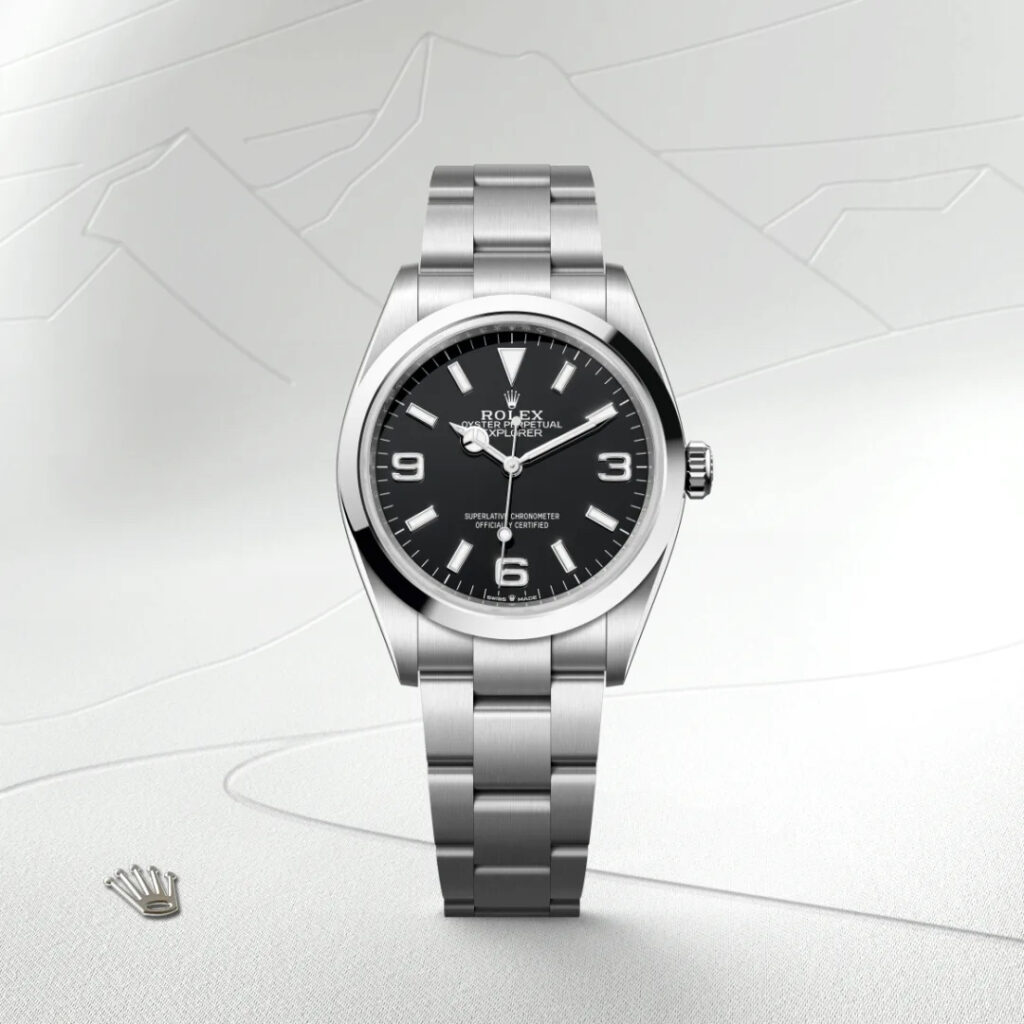
The Explorer’s design and engineering reflect its mountain-borne heritage. Rolex emphasises the piece’s chronometric precision even in the most extreme conditions — high altitude, low temperatures, and harsh terrain.
Key design features that map to this heritage:
- A robust Oyster case, originally designed for waterproofing and reliability.
- A minimalist dial for legibility — large luminous indices and clear 3-6-9 numerals make reading the time under conditions of low light or fatigue straightforward.
- Historically, winding systems and movements engineered to handle shock and extremes, making the Explorer a true tool watch rather than a dress piece.
It’s precisely this combination of simplicity, toughness and clarity that has helped the Explorer not just survive but thrive in narrative — from summit to wrist.
Evolution of the Explorer: From Summit to Everyday
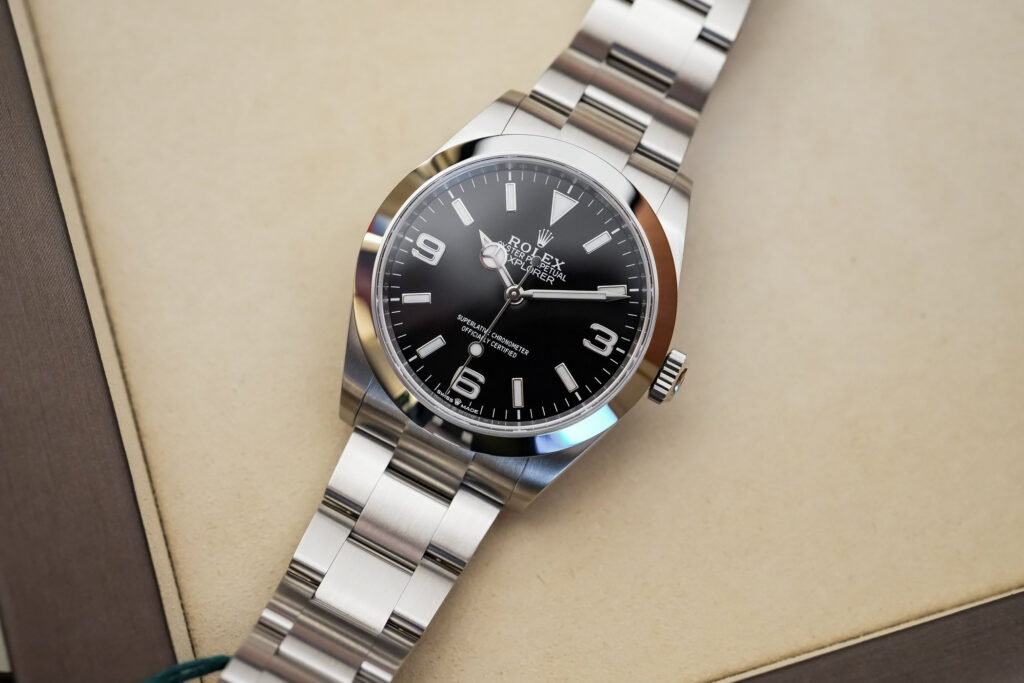
From its 1953 roots, the Explorer has evolved while staying remarkably true to its DNA. From the original 36 mm case to recent models in 40 mm and updated movements, the watch continues to appeal to both mountaineers and urban professionals.
Modern versions feature updated calibres, improved shock resistance, and contemporary materials — yet they retain the core visual identity of the early model: clean dial, rugged case, and understated style.
For many collectors, the Explorer represents the sweet spot of Rolex: a watch that’s less flashy than a Submariner or Daytona, but more purposeful and rich in story.
Why This Story Matters to Watch Collectors
Owning the Explorer means more than wearing a luxury timepiece—it means wearing a legacy. The Everest connection gives the model a deeper resonance: you’re not just buying a watch, you’re buying part of adventure history.
Furthermore, this storytelling elevates the piece’s value proposition: durability + heritage. A watch that passed the test of the Himalayas has symbolic endurance, which appeals to collectors who value both functionality and legacy.
The Explorer also sits at an interesting intersection: one part professional tool watch, one part minimalist design icon. It’s therefore accessible to both serious collectors and people seeking a high-end watch with depth.
Things to Know Before Buying
- Version and size matter: Earlier models were 36 mm; modern ones swing up to 40 mm. Case size affects wearability and collectibility.
- Maintain service history: Given its tool-watch heritage, proper servicing preserves value and performance.
- Provenance vs. myth: While the Everest story is powerful, some debate remains about exactly which watch reached the summit. Focus on the spirit rather than asking whether that exact model made it.
- Use and lifestyle: The Explorer truly shines when worn—its strength is best demonstrated on wrist, not in a box.
Final Thoughts
The Explorer’s ascent in horology mirrors the feat it celebrates: enduring, understated, and triumphant. Whether you’re scaling real peaks or simply navigating everyday ones, the Explorer stands as a testament to reliable design and human aspiration.
When you strap on the Explorer, you’re wearing something that doesn’t just tell time—it tells a story. And that story? It began at the summit of Mount Everest.


One Comment