Hublot is one of the most polarising brands in modern Swiss watchmaking—and that is precisely what makes it fascinating. Loved by some, criticised by others, Hublot has carved out a distinct identity built on bold design, unconventional materials, and unapologetic modernity. This guide explores every major Hublot collection, explaining what defines each line, who it is for, and how it fits into the broader luxury watch landscape.
Whether you are curious about the iconic Big Bang, intrigued by the Classic Fusion, or wondering where Hublot fits among traditional Swiss maisons, this comprehensive guide will help you understand the brand in full.
Understanding Hublot’s Philosophy: The Art of Fusion
Founded in 1980 by Carlo Crocco and later transformed under Jean-Claude Biver, Hublot is rooted in a simple but radical idea: “The Art of Fusion.” This philosophy blends traditional Swiss watchmaking with unexpected materials such as rubber, carbon fibre, sapphire, ceramic, and proprietary gold alloys.
Unlike heritage brands that emphasise continuity, Hublot embraces disruption. Its watches are meant to be bold, contemporary, and immediately recognisable—often prioritising design impact and material innovation over classical restraint.
Big Bang: The Watch That Defined Hublot
The Big Bang is not just Hublot’s flagship collection—it is the watch that made the brand globally famous. Introduced in 2005, the Big Bang combined a layered case construction, exposed screws, oversized proportions, and mixed materials in a way the luxury watch world had never seen.
The design is instantly recognisable: a large round case, six visible bezel screws, a rubber strap (once considered heretical in luxury watches), and bold dial architecture. Over time, the Big Bang family expanded into multiple sub-collections.
Big Bang Original
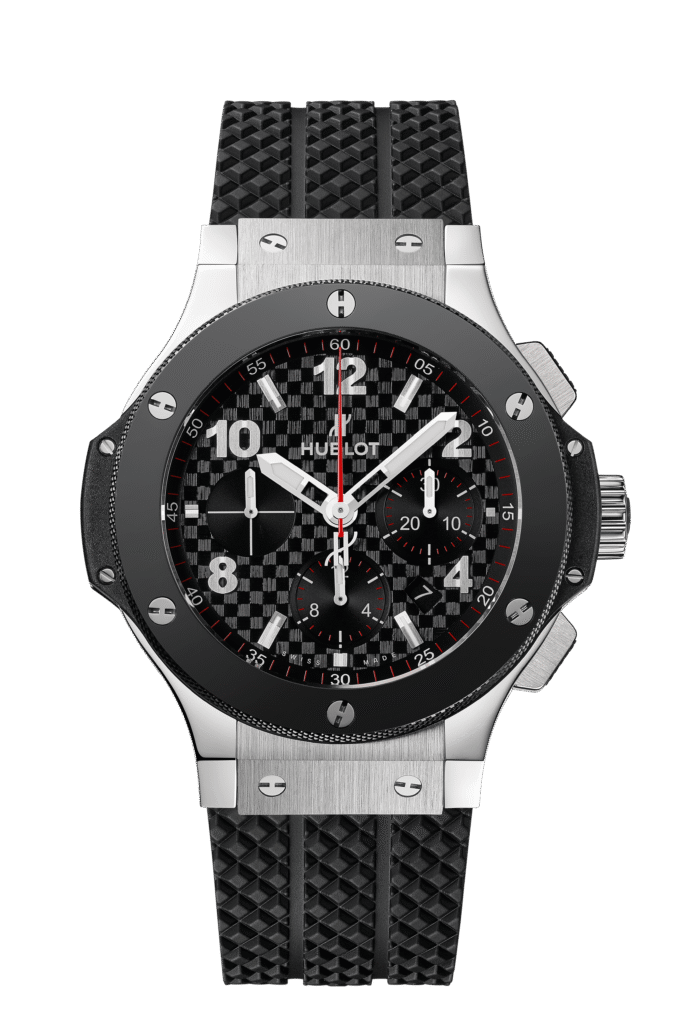
The Big Bang Original retains the classic chronograph layout that launched the brand’s modern era. It is available in materials ranging from titanium and ceramic to gold and carbon fibre. This is the most “traditional” Big Bang, though still unmistakably modern.
Big Bang Unico
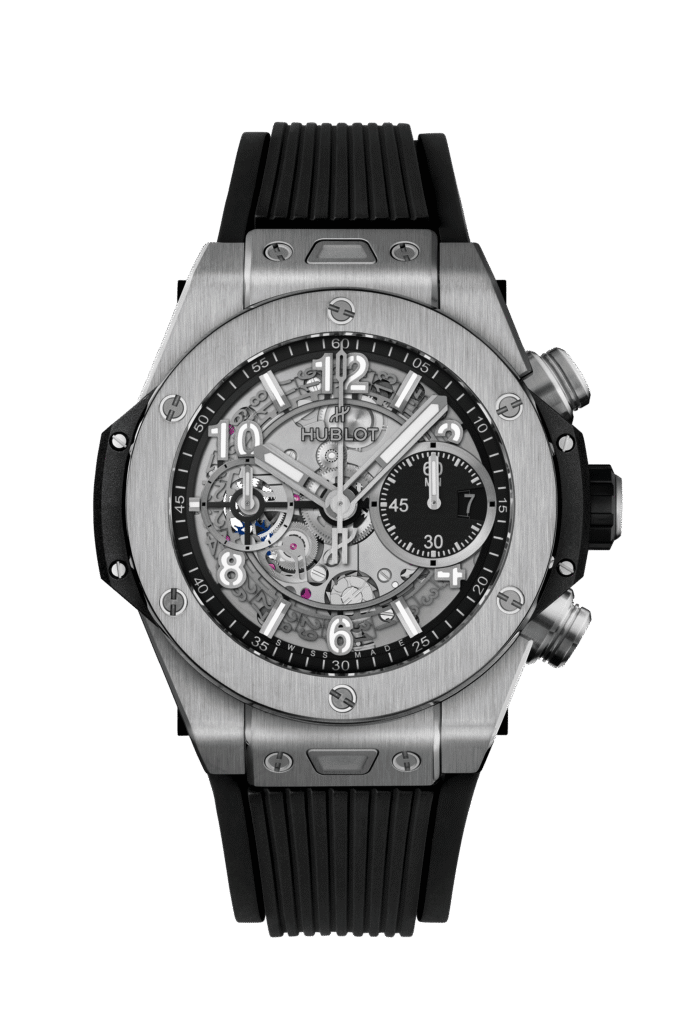
The Big Bang Unico represents Hublot’s technical evolution. It features the brand’s in-house UNICO chronograph movement, visible through openworked dials and sapphire casebacks. These watches lean heavily into skeletonisation, industrial design, and mechanical theatre.
Big Bang Integrated
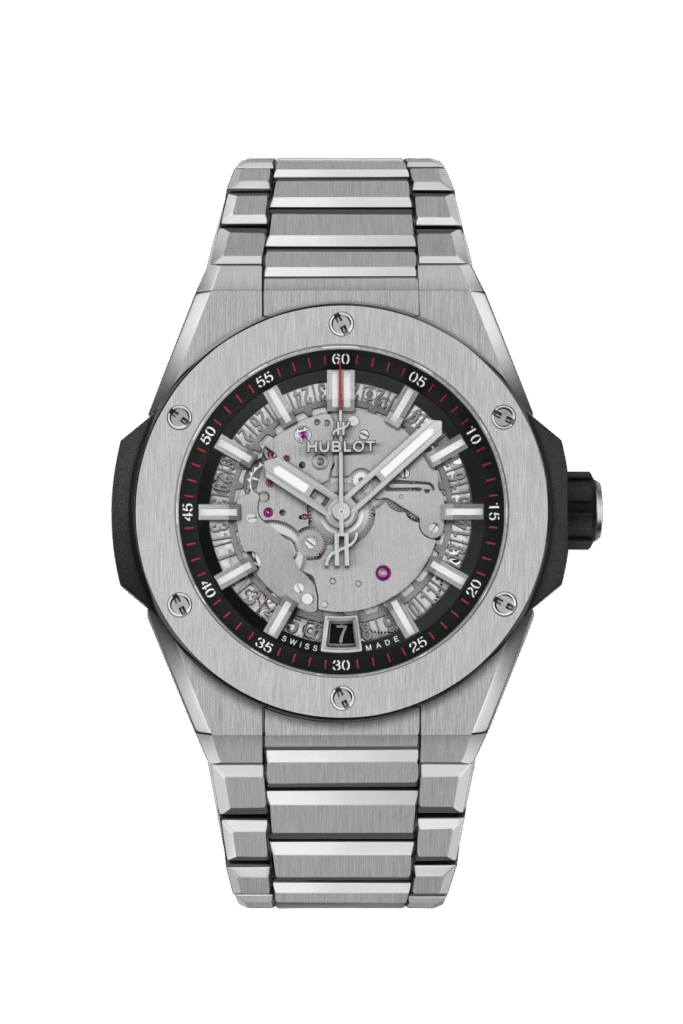
A newer and highly popular addition, the Big Bang Integrated combines the Big Bang case with a fully integrated bracelet. This places Hublot in conversation with luxury sports watches like the Royal Oak and Nautilus—though with a far more aggressive, modern aesthetic.
Big Bang MP (Manufacture Pieces)
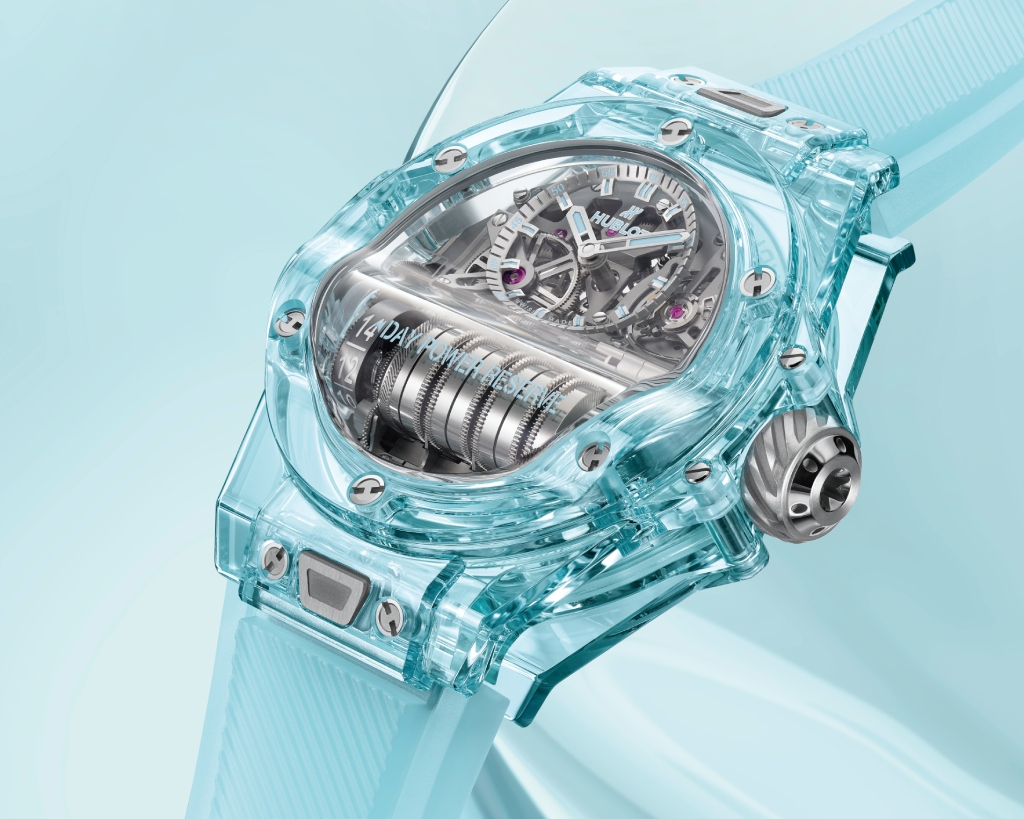
At the extreme end of the spectrum, the Big Bang MP models showcase experimental haute horlogerie. These watches feature unconventional displays, multi-axis tourbillons, and futuristic constructions. They are limited, expensive, and designed to push boundaries rather than please traditionalists.
Classic Fusion: Hublot’s Quiet Luxury Side
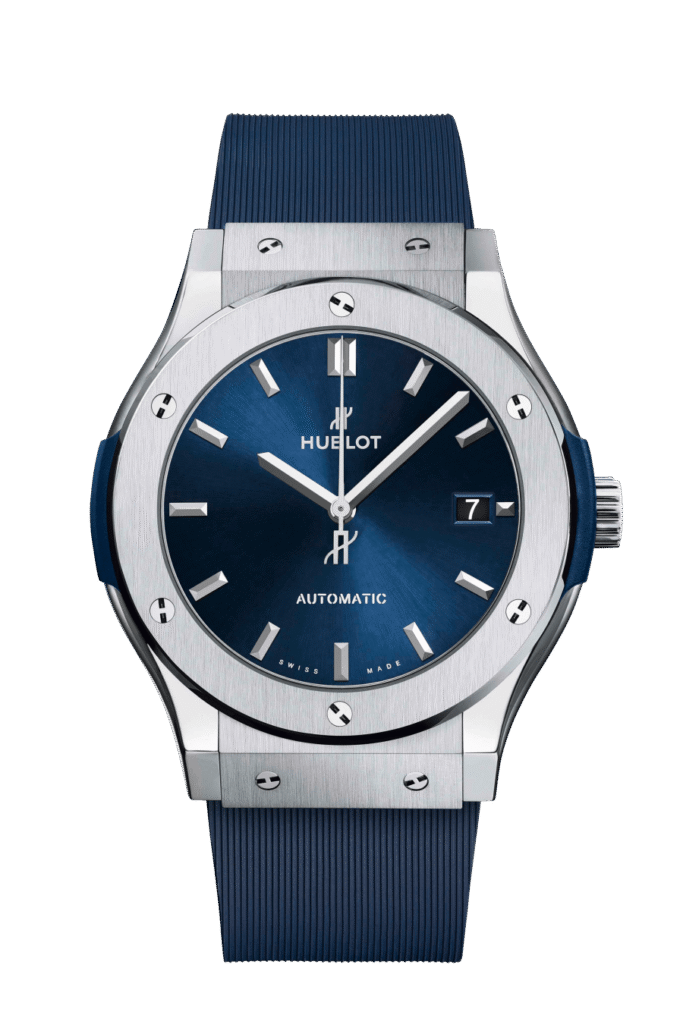
While the Big Bang dominates headlines, the Classic Fusion collection reveals Hublot’s more restrained side. This line strips away much of the Big Bang’s visual aggression, focusing instead on clean dials, slimmer cases, and elegant proportions.
Classic Fusion watches often feature simple time-only or chronograph layouts, polished cases, and understated branding. They are available in titanium, ceramic, King Gold, and even sapphire, offering refinement without abandoning Hublot’s material innovation.
For buyers who appreciate Hublot’s modern ethos but prefer something more discreet, Classic Fusion is often the entry point.
Spirit of Big Bang: Hublot Goes Tonneau
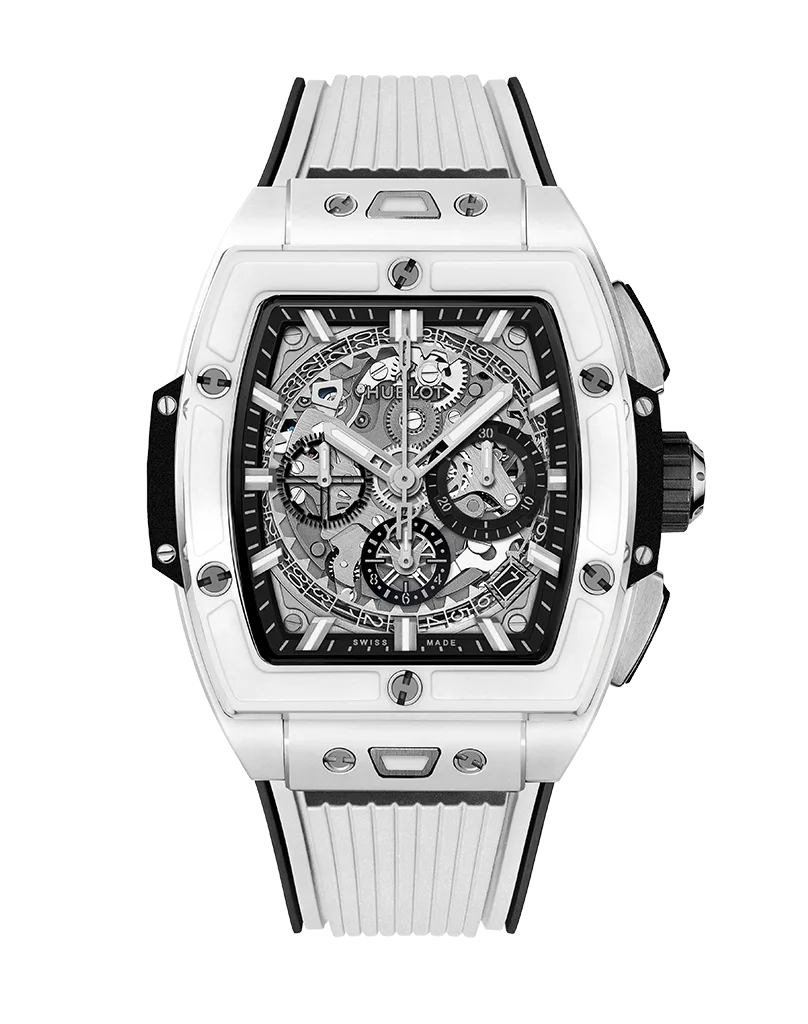
The Spirit of Big Bang takes Hublot’s design language and places it into a tonneau-shaped case. Inspired loosely by brands like Richard Mille—but unmistakably Hublot—the Spirit of Big Bang combines skeletonised movements, curved cases, and bold materials.
This collection appeals to collectors who want something visually distinctive and ergonomic on the wrist. It remains very much a statement watch, but one that offers a different silhouette from the brand’s round-case staples.
Square Bang: A New Geometry
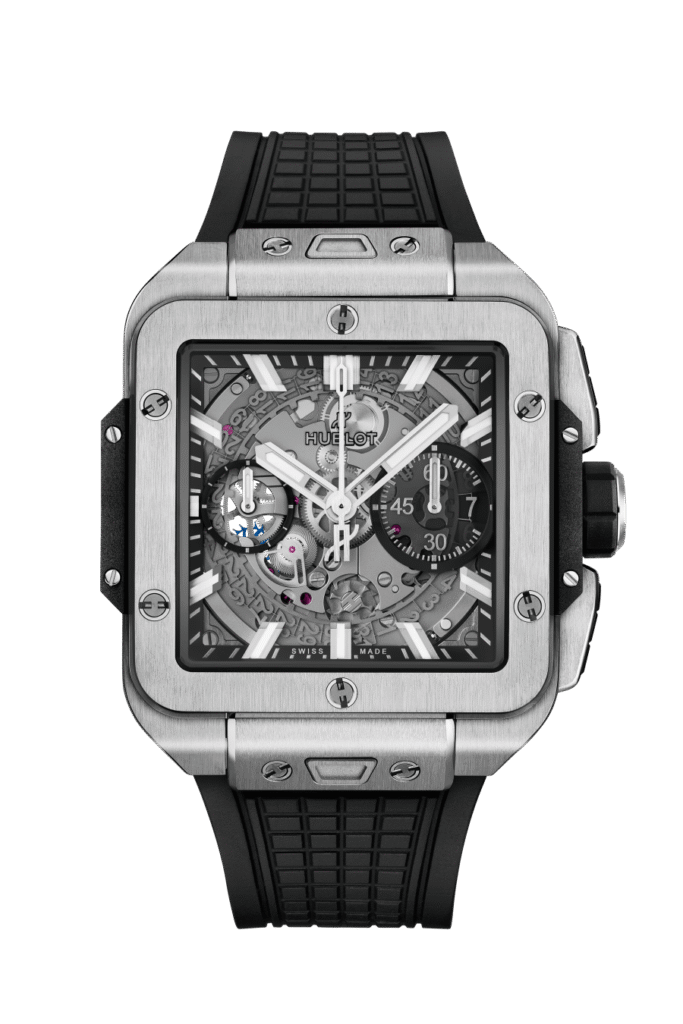
The Square Bang is Hublot’s newest major design experiment, translating the Big Bang’s layered construction and exposed screws into a square case. While square watches are not new, Hublot’s approach is unmistakably contemporary and architectural.
This collection signals Hublot’s willingness to expand beyond traditional shapes while maintaining strong brand identity. It is aimed at collectors who want something unconventional yet still recognisably Hublot.
Hublot Novelties and Special Editions
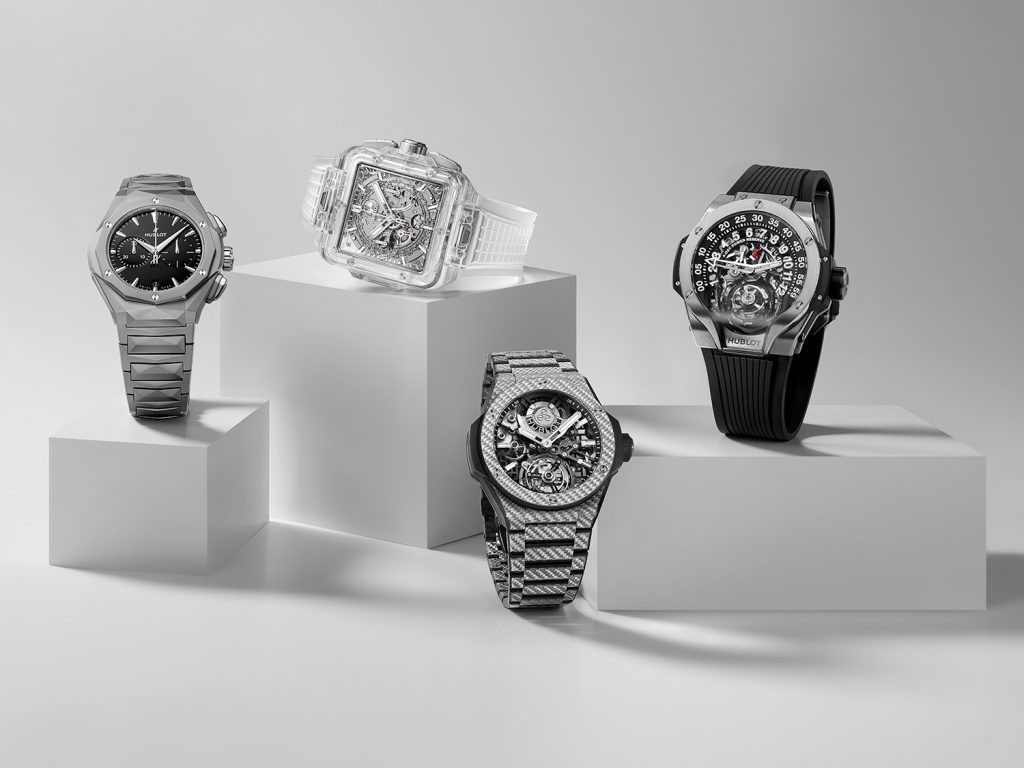
Hublot is particularly known for its limited editions and collaborations, often tied to sports, art, and pop culture. Football clubs, athletes, artists, and global events frequently inspire special Big Bang and Classic Fusion releases.
While these watches are sometimes criticised as marketing-driven, they play a significant role in Hublot’s success. For collectors, limited editions can offer uniqueness and collectability—though resale value varies widely depending on execution and demand.
Materials That Set Hublot Apart
One of Hublot’s strongest differentiators is its obsession with materials. The brand has developed proprietary compounds such as:
- King Gold, a warm rose gold alloy with added platinum for durability and colour stability
- Magic Gold, a scratch-resistant gold composite
- Coloured ceramics, including bright reds, blues, and yellows
- Sapphire cases, produced in multiple colours
These materials are not gimmicks—they are technically challenging and demonstrate genuine manufacturing expertise.
Movements and Watchmaking Credibility
Historically, critics dismissed Hublot for using outsourced movements. While that criticism once held weight, modern Hublot has invested heavily in in-house calibres, particularly with the UNICO chronograph platform and advanced tourbillon movements.
While Hublot may not emphasise traditional hand-finishing in the same way as Patek Philippe or Vacheron Constantin, its focus lies in engineering, architecture, and innovation rather than classical decoration.
Who Are Hublot Watches For?
Hublot watches are not designed to be subtle. They appeal to buyers who want:
- Strong wrist presence
- Modern, architectural design
- Innovative materials
- A brand that feels contemporary rather than heritage-focused
They are less suited to those who value understated elegance or vintage-inspired design. In that sense, Hublot knows exactly who it is—and who it isn’t for.
Collectability, Value, and Market Perception
Hublot’s secondary-market performance varies significantly by model. Certain Big Bang and limited editions depreciate more than traditional Swiss icons, while others—particularly well-executed or rare pieces—retain solid value.
Collectors generally approach Hublot with a wear-and-enjoy mindset rather than strict investment expectations. That said, the brand’s technical progress and continued innovation have gradually improved its reputation among serious enthusiasts.
Final Thoughts: Understanding Hublot as a Brand
Hublot occupies a unique position in modern horology. It is not trying to compete with vintage-driven brands or quiet luxury maisons. Instead, it champions boldness, experimentation, and contemporary luxury.
Understanding Hublot means appreciating its intent. When viewed through the lens of innovation, materials science, and modern design, the brand makes sense—and for the right collector, it offers something few others do: a luxury watch that refuses to blend in.
If you’re building a collection that values diversity, modernity, and wrist presence, Hublot deserves serious consideration.